Saturday, July 19, 2014

Can Students Use YouTube to Do Research?

 Look at these pictures of my students – they are all on YouTube, but they are…researching?  Can that be right? 
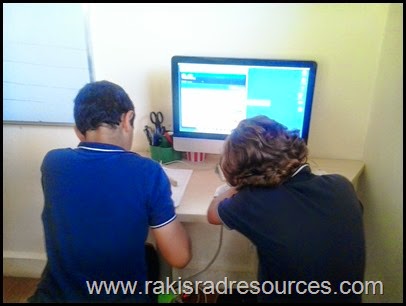
Educational videos from YouTube can provide quality research tools in the classroom - find out details from Raki's Rad Resources.

 Yep, that’s right – these students were researching famous Astronomers for our Historical Scientists Project.Educational videos from YouTube can provide quality research tools in the classroom - find out details from Raki's Rad Resources And these students were researching for their virtual desert field trip project during our Desert Science Unit.

Educational videos from YouTube can provide quality research tools in the classroom - find out details from Raki's Rad Resources

In my mixed age class of 2nd – 5th graders (Year 3 – Year 6), my students often used YouTube as a research tool.  I always required a “mixture of sources” including some you have to read and some you can watch, but I found that there were some distinct advantages to my students to being able to use video as a research tool.

1.  My younger students, and lower readers, were able to find much more information, making them much more successful in Science and Social Studies.

2.  My students developed very good note taking skills while they were using videos to research.  When they were reading, they tended to copy down the exact words on the screen or in the book, but with videos they had no other choice than to put the information in their own words.

3.  Students were exposed to lots of ads and distractions.  While this may not seem like a good thing, they quickly learned how to get rid of the ads and distraction and focus on the task at hand, so that by our second project, they worked like those distractions weren’t even there – this my friends is a life skill in our current digital era.

4.  YouTube is like Google – it is a search engine, and search engines can be quite difficult for kids, who often think of them as question answering devices.  While I generally start my students out with suggested videos, they were also allowed to use search and became very good at picking out great key words and finding synonyms for less common words, as well as looking at a video critically to see if it was entertainment or informational.

Educational videos from YouTube can provide quality research tools in the classroom - find out details from Raki's Rad Resources

As with any type of research, you need to start out teaching students HOW to use video as a research tool, but pausing, taking notes, finding just the right video etc.  Here are some great YouTube Channels that you might want to consider using with your students:


Educational videos from YouTube can provide quality research tools in the classroom - find out details from Raki's Rad Resources - Crash Course


Crash Course – 10 to 15 minute videos on tons of Science and Social Studies topics



Educational videos from YouTube can provide quality research tools in the classroom - find out details from Raki's Rad Resources - Make Me Genius


Make Me Genius – 3 to 8 minute videos designed for kids on tons of Science topics



Educational videos from YouTube can provide quality research tools in the classroom - find out details from Raki's Rad Resources - TED Ed TED Education – 5 – 20 minute videos designed for kids on tons of Science and Social Studies topics


I know that many schools ban YouTube, if your school is one of those, check out these Alternatives to YouTube with educational videos.  Either way, I ask you to consider video as a research methodology for your students this year.

Heidi Raki of Raki's Rad Resources

Friday, July 18, 2014

Charades in the Classroom

There are so many classic party games and recess games that kids in our digital age have never heard of.  These games are mentioned in books all the time, and not knowing the games means that kids have a hard time connecting to and understanding these books.  Teaching them in the classroom not only increases a child’s background knowledge and gives them a creative new way to play, but also can include curriculum connections.

Using charades can help increase student engagement and encourage curriculum connections.

Charades is a great example of a game that can be used to create curriculum connections while keeping kids engaged and giving them a new set of background knowledge.  Remind students that in charades you can use movements and gestures, but no sounds or words.  Here are some simple ways to use charades in your classroom:

1.)  Act out vocabulary words – Anything from vocabulary words in your content unit to vocabulary words from a novel study to ESL vocabulary words can be acted out. 

Write each word on a piece of paper – throw them in a hat (or cup or baggie or whatever you have on hand). Have students pull a paper and act it out while the rest of the class tries to guess what the word is.

Using charades can help increase student engagement and encourage curriculum connections. 2.)  Act out the plot of a book you have read as a whole class – This works best at the end of the school year, when you have read a variety of books together.  For older students, this could be a way to review classic books like Dr. Seuss or other books they “should have” read when they were younger.  It can also be way to review a group of short stories or poems that you have read.

Write the title of each story on pieces of paper - throw them in a hat (or cup or baggie or whatever you have on hand). Have students pull a paper and act out the plot while the rest of the class tries to guess which book it is.

3.)  Pretend to be a favorite person, or a favorite time period – Great for your Social Studies review, but would also work with famous scientists, famous authors or people in the news. 

Write the names of a bunch of people on pieces of paper (You could substitute historical events here as well) - throw them in a hat (or cup or baggie or whatever you have on hand). Have students pull a paper and act out the person – or people from that time period - while the rest of the class tries to guess who or when it is.

4.)  Pretend to be a certain animal – For younger students guessing the animal itself would be enough, but to make it more challenging for older students, they might call out an animal that would be predator – or prey – to this animal, where the animal might live (habitat or continent) or an evolutionary cousin of the animal (ie. horse and donkey)

Write the names of a bunch of animals on pieces of paper - throw them in a hat (or cup or baggie or whatever you have on hand). Have students pull a paper and act out the animal’s actions while the rest of the class tries to call out the correct answer.

5.) Act out a shape or an angle – Even Math can get in on the charades game.  Have students “be the shape” – 2-dimensional or 3-dimensional, or create the correct angle, while their friends call out the names of these geometrical principles.

Write the names of a bunch of shapes or concepts on pieces of paper - throw them in a hat (or cup or baggie or whatever you have on hand). Have students pull a paper and use their body to represent that shape or concept while the rest of the class tries to call out the correct answer.


boardgamesfortheclassroom How else could you use charades in your classroom?  For more suggestions on how to use games in the classroom, come back regularly for my Friday Game Night posts.

Heidi Raki of Raki's Rad Resources