
My class is reading The Case of the Gasping Garbage by Michele Torrey. This book is very cute and engaging, but it's also quite challenging for my students. A few weeks ago we read the first 2 chapters which included a mystery where yeast and flour combine to make a "monster" in the garbage can. Unfortunately, most of my students had no idea what yeast was. So they didn't understand how it could bubble and burp. The next day I threw my lesson plans out the window to correct that. I brought in the ingredients to make bread and made sure that all of my students knew what yeast did.

First we combined 2 tablespoons of sugar, 1 cup of water and 1 tablespoon of yeast and watched it make bubbles.

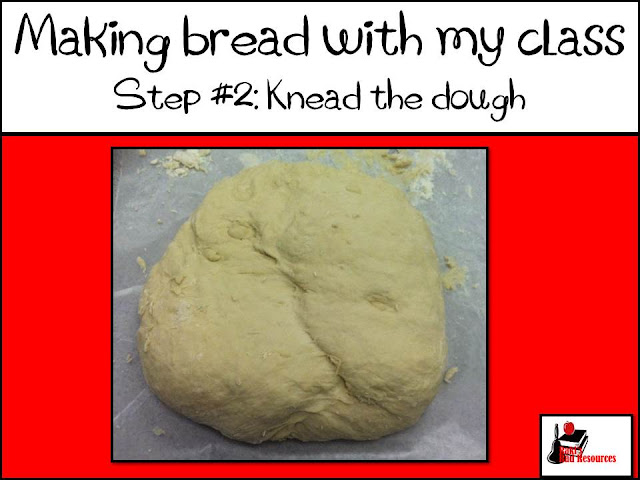
Then we added 6 cups of flour (plus a little) and a tablespoon of salt. I kneaded the bread in front of the class so they could see it come together. ("Ooooh, my grandma does that when she makes tortillas!" said one of my students.)
We put the bread into an oiled bowl and covered it. The story talked about keeping it in a warm place. Unfortunately, the air conditioning in my room runs at full blast and there are no windows. But, we improvised and wrapped it up with the extra sweater that I keep in my classroom. ("Like a baby" one of my students said.)

While we did grammar and had lunch, our yeast worked it's magic and by mid-day we had a big bowl full of dough, which I promptly punched down, making it "burp" like the dough in the story. Next the students each tried their hand at kneading their own small ball of dough and flattening it into a pita shaped piece of bread. They put their bread onto a piece of wax paper with their name on it to rise for the second time while we worked on answering the questions on this very chapter of The Case of the Gasping Garbage.

Finally, just before the end of the day the students flattened their dough one more time and I fried it up on my electric skillet so that we ended up with a fried flat bread. (It was very reminecent of the Moroccan batbout that I miss so much!)

At the end of the day the kids could all explain that flour and yeast mix and make gas bubbles that form inside bread. So I guess that means that missing out on a few of the things that were originally on the lesson plan in order to improvise this lesson was completely worth it. We didn't read the next chapter like I had planned to. We didn't do our Nancy Drew read aloud. We didn't even get to conjugating verbs. But, at the end of the day I'd rather they understand something very well and build background knowledge they can use later than stay strictly on schedule.


First we combined 2 tablespoons of sugar, 1 cup of water and 1 tablespoon of yeast and watched it make bubbles.

Then we added 6 cups of flour (plus a little) and a tablespoon of salt. I kneaded the bread in front of the class so they could see it come together. ("Ooooh, my grandma does that when she makes tortillas!" said one of my students.)

We put the bread into an oiled bowl and covered it. The story talked about keeping it in a warm place. Unfortunately, the air conditioning in my room runs at full blast and there are no windows. But, we improvised and wrapped it up with the extra sweater that I keep in my classroom. ("Like a baby" one of my students said.)

While we did grammar and had lunch, our yeast worked it's magic and by mid-day we had a big bowl full of dough, which I promptly punched down, making it "burp" like the dough in the story. Next the students each tried their hand at kneading their own small ball of dough and flattening it into a pita shaped piece of bread. They put their bread onto a piece of wax paper with their name on it to rise for the second time while we worked on answering the questions on this very chapter of The Case of the Gasping Garbage.

Finally, just before the end of the day the students flattened their dough one more time and I fried it up on my electric skillet so that we ended up with a fried flat bread. (It was very reminecent of the Moroccan batbout that I miss so much!)

At the end of the day the kids could all explain that flour and yeast mix and make gas bubbles that form inside bread. So I guess that means that missing out on a few of the things that were originally on the lesson plan in order to improvise this lesson was completely worth it. We didn't read the next chapter like I had planned to. We didn't do our Nancy Drew read aloud. We didn't even get to conjugating verbs. But, at the end of the day I'd rather they understand something very well and build background knowledge they can use later than stay strictly on schedule.


