Showing posts with label Cooking. Show all posts

Sunday, August 21, 2016

The Best Lessons are Unplanned

My class is reading The Case of the Gasping Garbage by Michele Torrey. This book is very cute and engaging, but it's also quite challenging for my students. A few weeks ago we read the first 2 chapters which included a mystery where yeast and flour combine to make a "monster" in the garbage can. Unfortunately, most of my students had no idea what yeast was. So they didn't understand how it could bubble and burp. The next day I threw my lesson plans out the window to correct that. I brought in the ingredients to make bread and made sure that all of my students knew what yeast did.


Unplanned lessons are often better than what is on the lesson plans - why I made bread with my class to help them learn what yeast did and understand the Case of the Gasping Garbage.

First we combined 2 tablespoons of sugar, 1 cup of water and 1 tablespoon of yeast and watched it make bubbles.
Unplanned lessons are often better than what is on the lesson plans - why I made bread with my class to help them learn what yeast did and understand the Case of the Gasping Garbage.

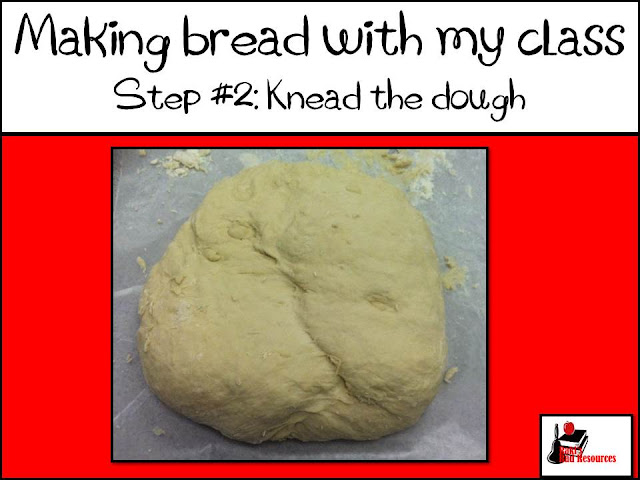
Then we added 6 cups of flour (plus a little) and a tablespoon of salt. I kneaded the bread in front of the class so they could see it come together. ("Ooooh, my grandma does that when she makes tortillas!" said one of my students.)
Unplanned lessons are often better than what is on the lesson plans - why I made bread with my class to help them learn what yeast did and understand the Case of the Gasping Garbage.

We put the bread into an oiled bowl and covered it. The story talked about keeping it in a warm place. Unfortunately, the air conditioning in my room runs at full blast and there are no windows. But, we improvised and wrapped it up with the extra sweater that I keep in my classroom. ("Like a baby" one of my students said.)
Unplanned lessons are often better than what is on the lesson plans - why I made bread with my class to help them learn what yeast did and understand the Case of the Gasping Garbage.

While we did grammar and had lunch, our yeast worked it's magic and by mid-day we had a big bowl full of dough, which I promptly punched down, making it "burp" like the dough in the story. Next the students each tried their hand at kneading their own small ball of dough and flattening it into a pita shaped piece of bread. They put their bread onto a piece of wax paper with their name on it to rise for the second time while we worked on answering the questions on this very chapter of The Case of the Gasping Garbage.
Unplanned lessons are often better than what is on the lesson plans - why I made bread with my class to help them learn what yeast did and understand the Case of the Gasping Garbage.


Finally, just before the end of the day the students flattened their dough one more time and I fried it up on my electric skillet so that we ended up with a fried flat bread. (It was very reminecent of the Moroccan batbout that I miss so much!)
Unplanned lessons are often better than what is on the lesson plans - why I made bread with my class to help them learn what yeast did and understand the Case of the Gasping Garbage.

At the end of the day the kids could all explain that flour and yeast mix and make gas bubbles that form inside bread. So I guess that means that missing out on a few of the things that were originally on the lesson plan in order to improvise this lesson was completely worth it. We didn't read the next chapter like I had planned to. We didn't do our Nancy Drew read aloud. We didn't even get to conjugating verbs. But, at the end of the day I'd rather they understand something very well and build background knowledge they can use later than stay strictly on schedule. 


Wednesday, December 24, 2014

Create Your Own Cookie Recipes

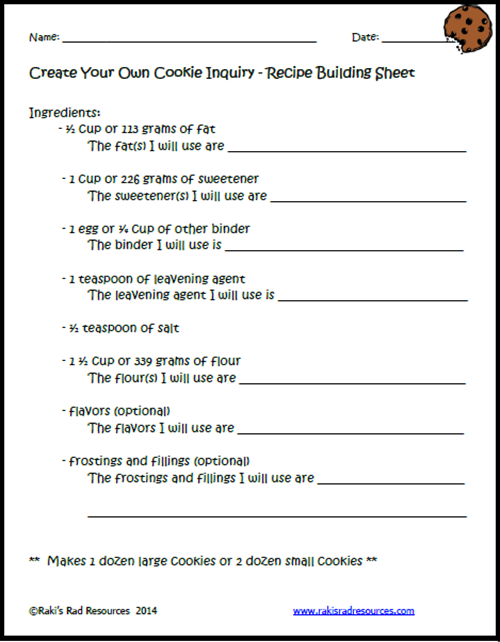
Baking is a huge part of our holiday traditions.  This year we started a new tradition.  My two older sons designed their own cookie recipes.  For the past few weeks, we have done a ton of baking, exploring different cookie and candy recipes.  During this “inquiry” my sons realized that most cookie recipes include the same ingredients and asked me if they could design their own cookies with these base ingredients.  So of course, me being me, I went and designed a “planning sheet” to help make the project a bit more manageable.  (Even with just 2 or 3 kids projects like that can drive me crazy if I approach them with out a plan.)  I’ve made this plan for creating your own cookie recipes available to others in my Teachers Pay Teachers store.

First, we talked about those things all cookies have – fats, sugars, flours, binders and flavors.  Then the kids planned out their recipes. 

   Create your own cookie recipe - science inquiry project from Raki's Rad Resources

 Create your own cookie recipe - science inquiry project from Raki's Rad Resources

Then, the kids went ahead and prepared and baked their cookies.

Create your own cookie recipe - science inquiry project from Raki's Rad Resources


Create your own cookie recipe - science inquiry project from Raki's Rad Resources

Create your own cookie recipe - science inquiry project from Raki's Rad Resources

Create your own cookie recipe - science inquiry project from Raki's Rad Resources

And of course their favorite part was taste testing the results!

Create your own cookie recipe - science inquiry project from Raki's Rad Resources.

This project helped us talk about chemical changes, heat and ingredients.  It was also fun and gave the kids a chance to be really creative in a new way.  It would be a great activity for homeschoolers, in a classroom or even with your kids over the holiday break.  In the spirit of the holidays, I am offering the Create Your Own Cookie Science Inquiry project up for FREE for the next week.  Download your copy between now and December 31, 2014.  Once the calendar changes to 2015, the price on this project will be $5.00.  Merry Christmas!

Heidi Raki of Raki's Rad Resources

Friday, December 19, 2014

Holiday Baking Projects Produce Learning Experiences

Those of you who follow me on Instagram have seen some of these pictures lately in my feed.  (If you don’t follow me on Instagram yet – my handle is simply rakisradresources.)

Holiday Cooking Projects

At this time of year, baking and making candy is a HUGE part of the holiday traditions in my household.  Some of the recipes we make are recipes that I made with my mom as a child, like Kris Kringles (cut out cookies with frosting) and Mexican Wedding Cakes.  However, each year we try some new recipes.  This year, we made lollipops and fudge!

As a homeschooling family, baking is about more than just spending time together and building traditions (although those things are awesome too!)  We also work on a wide range of math and science topics including measurement, doubling, and heat.  We work on safety and talk about the chemical reactions that are going on while we are cooking.  Sometimes we talk about how cooking and ingredients have changed throughout history or why certain foods are considered holiday foods.  For example, pumpkin and apple pie are traditionally cooked for Thanksgiving because they are seasonal produce of the season, just as watermelon is seasonal to Independence Day.  The conversations that we have while baking are priceless for building background knowledge and understanding. While it is slightly easier to do these projects with my small group of 3, I have done cooking projects in the classroom setting too, with groups as large as 30 or 40 kids. 

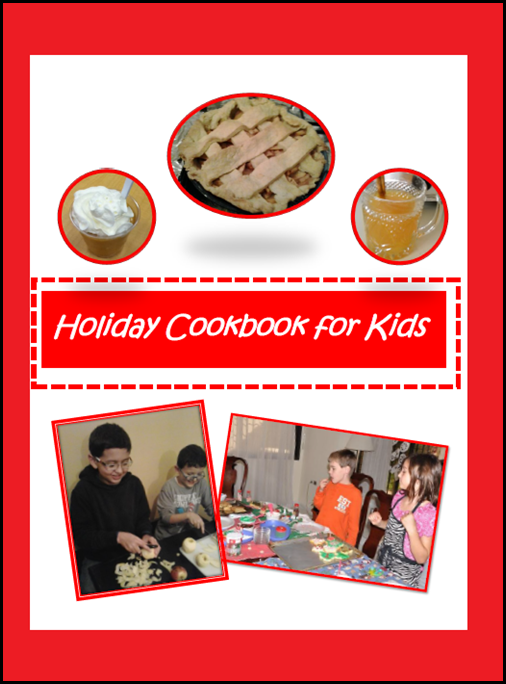
Last year, I worked with a group of teacher bloggers to put together a Holiday Cookbook for Kids.  The recipes inside are perfect for classroom or homeschooling atmospheres.  The cookbook is available as a free download from my Teachers Pay Teachers store.

holiday cookbook

What cooking or baking projects will you be doing with kids – in school or at home – this year?

Heidi Raki of Raki's Rad Resources

Monday, January 27, 2014

Eggs-traordinary Learning About Heat

My class has been learning about heat, and last week we used eggs to look at multiple different heat concepts. 

First, we looked at conduction, convection and radiation by cooking three eggs in three different ways.  The first egg was fried, which represented conduction – as the egg directly touched the pan, which directly touched the fire.  The second egg was baked in the oven, which represented convection – as neither the egg or the pan ever touched the fire, but the egg was cooked by hot air moving around the oven.  The third egg was scrambled and cooked quickly in the microwave, which represented radiation.

Using eggs to cook science - conduction, convection, radiation, etc. - from Raki's Rad Resources.


Next, we looked at convection through water and boiled eggs.  We also looked at the fact that the longer something comes in contact with heat, the more it changes.  We put five eggs into lightly boiling water and took out one egg each minute for five minutes.  If I were to repeat this, I would have waited until the water was at a rolling boil or put the eggs into the water from the beginning, as the eggs did not cook as quickly as I would have liked, or I would have left the eggs in longer.  However, we were able to see marked differences between the first and last egg.

Using eggs to cook science - conduction, convection, radiation, etc. - from Raki's Rad Resources.


Finally, I asked each of my kids to go home and find an egg recipe – from a cookbook or their parents.  On Friday, we took each of the recipes and cooked them.  We made scrambled eggs, deviled eggs, boiled eggs with salt and cumin, an omelet, egg crepes, sunny side up eggs and a tortilla.  We even made a cookbook of all of our recipes.

Using eggs to cook science - conduction, convection, radiation, etc. - from Raki's Rad Resources.    Using eggs to cook science - conduction, convection, radiation, etc. - from Raki's Rad Resources.


Eggs are such a universal food, that this lesson combined cultures, with science, math, reading and writing. 

Heidi Raki of Raki's Rad Resources

Thursday, December 19, 2013

Reversible and Irreversible Candy

Model reversible and irreversible change for kids by creating sugar lollipops and chocolate lollipops.  Fun with cooking teaches science, math and critical thinking skills.  Post by Heidi Raki of Raki's Rad Resources.Last week before the Winter Holiday, trying to keep the kids focused.  We’re also supposed to be working on our heat unit, specifically introducing reversible and irreversible changes.  So, I decided to make candy!


We made two kinds of candy – sugar lollipops and chocolate lollipops.


The chocolate lollipops are quite simple – you break apart some dark chocolate, melt it in a pan and put it into molds.  If the chocolate gets too hard while you are filling the molds – apply more heat - hence the reversible part of chocolate lollipops.

Model reversible and irreversible change for kids by creating sugar lollipops and chocolate lollipops.  Fun with cooking teaches science, math and critical thinking skills.  Post by Heidi Raki of Raki's Rad Resources Model reversible and irreversible change for kids by creating sugar lollipops and chocolate lollipops.  Fun with cooking teaches science, math and critical thinking skills.  Post by Heidi Raki of Raki's Rad Resources

The sugar lollipops are a little more difficult, but not much.  I found my recipe on a blog called Funkytime, and decided to use the corn syrup free recipe, which calls for sugar, water, cream of tartar, food coloring and flavor oils – we used strawberry.  After mixing the sugar, water and cream of tartar, you heat until 290 degrees Fahrenheit.  Then, add food coloring and flavor and POUR onto molds. 

Model reversible and irreversible change for kids by creating sugar lollipops and chocolate lollipops.  Fun with cooking teaches science, math and critical thinking skills.  Post by Heidi Raki of Raki's Rad Resources 

 Model reversible and irreversible change for kids by creating sugar lollipops and chocolate lollipops.  Fun with cooking teaches science, math and critical thinking skills.  Post by Heidi Raki of Raki's Rad Resources Model reversible and irreversible change for kids by creating sugar lollipops and chocolate lollipops.  Fun with cooking teaches science, math and critical thinking skills.  Post by Heidi Raki of Raki's Rad Resources

I didn’t read that last direction well and we scooped our candy into the molds – only to have the candy get too hard to scoop, thereby wasting half of our candy.  However, we tried to heat what was left and found that it only got harder, proving the irreversibility of sugar lollipops. 

Model reversible and irreversible change for kids by creating sugar lollipops and chocolate lollipops.  Fun with cooking teaches science, math and critical thinking skills.  Post by Heidi Raki of Raki's Rad Resources Model reversible and irreversible change for kids by creating sugar lollipops and chocolate lollipops.  Fun with cooking teaches science, math and critical thinking skills.  Post by Heidi Raki of Raki's Rad Resources

Create a venn diagram representing reversible and irreversible change using lollipopsAfter making and setting our lollipops, we of course had to eat them, and then we filled in a Venn Diagram comparing and contrasting the two processes.


How are you fitting learning into the last days before Winter Break?

Heidi Raki of Raki's Rad Resources

Monday, November 25, 2013

Collaborative Cooking Project to Teach Doubling & Halving

Cooking with kids can help students learn cooperative learning skills, leadership skills, self-help skills, math skills, reading and writing skills.  Find out more at Raki's Rad ResourcesLast week all of the students from Year 1 (Kindergarten) through Year 6 (5th grade) worked on doubling and halving in math.  The Year 1 and Year 2 students worked on doubling and halving the numbers from 1 – 10.  The Year 3 – Year 5 students worked on doubling and halving larger numbers (2 – 4 digit numbers).  Year 6 worked on doubling and halving decimals and fractions.  On Friday, we combined all three classes and spent two hours cooking doubled recipes.  The students worked in multiage groups of 4 or 5 students.


First, the kids had to take there recipes and find the amounts needed for half a recipe and for double a recipe.  Each group had a different recipe.  Our recipes included – Orange Smoothie, Homemade Playdough, Ice Cream in a Bag, Chocolate Peanut Butter Bark, Jell-O and Vanilla Cakes.  Feel free to download our recipes sheets from Google Docs.

Cooking with kids can help students learn cooperative learning skills, leadership skills, self-help skills, math skills, reading and writing skills.  Find out more at Raki's Rad Resources     Cooking with kids can help students learn cooperative learning skills, leadership skills, self-help skills, math skills, reading and writing skills.  Find out more at Raki's Rad Resources

 Cooking with kids can help students learn cooperative learning skills, leadership skills, self-help skills, math skills, reading and writing skills.  Find out more at Raki's Rad Resources     Cooking with kids can help students learn cooperative learning skills, leadership skills, self-help skills, math skills, reading and writing skills.  Find out more at Raki's Rad Resources

Then, the students had to go through the steps of creating their recipes.  Although we had three teachers around to help, most of the groups were able to follow the recipes autonomously, generally led by their Year 6 students.

Cooking with kids can help students learn cooperative learning skills, leadership skills, self-help skills, math skills, reading and writing skills.  Find out more at Raki's Rad Resources      Cooking with kids can help students learn cooperative learning skills, leadership skills, self-help skills, math skills, reading and writing skills.  Find out more at Raki's Rad Resources   Cooking with kids can help students learn cooperative learning skills, leadership skills, self-help skills, math skills, reading and writing skills.  Find out more at Raki's Rad Resources    Cooking with kids can help students learn cooperative learning skills, leadership skills, self-help skills, math skills, reading and writing skills.  Find out more at Raki's Rad Resources       Cooking with kids can help students learn cooperative learning skills, leadership skills, self-help skills, math skills, reading and writing skills.  Find out more at Raki's Rad Resources         Cooking with kids can help students learn cooperative learning skills, leadership skills, self-help skills, math skills, reading and writing skills.  Find out more at Raki's Rad Resources

    Cooking with kids can help students learn cooperative learning skills, leadership skills, self-help skills, math skills, reading and writing skills.  Find out more at Raki's Rad Resources         Cooking with kids can help students learn cooperative learning skills, leadership skills, self-help skills, math skills, reading and writing skills.  Find out more at Raki's Rad Resources  

Each of the recipes finished at different times, so those students who finished early – or who had a long amount of time waiting during a step in their recipe – received a piece of paper and some crayons to reflect on the cooking experience.

 Cooking with kids can help students learn cooperative learning skills, leadership skills, self-help skills, math skills, reading and writing skills.  Find out more at Raki's Rad Resources    Cooking with kids can help students learn cooperative learning skills, leadership skills, self-help skills, math skills, reading and writing skills.  Find out more at Raki's Rad Resources    Cooking with kids can help students learn cooperative learning skills, leadership skills, self-help skills, math skills, reading and writing skills.  Find out more at Raki's Rad Resources Cooking with kids can help students learn cooperative learning skills, leadership skills, self-help skills, math skills, reading and writing skills.  Find out more at Raki's Rad Resources 

Once all of the recipes were complete – each group served their finished product to the other friends.  The students were also responsible for cleaning up the materials and workspace where they cooked.  Since many of our students come from homes with household help, this is an important skill for our students to practice.

 Cooking with kids can help students learn cooperative learning skills, leadership skills, self-help skills, math skills, reading and writing skills.  Find out more at Raki's Rad Resources   Cooking with kids can help students learn cooperative learning skills, leadership skills, self-help skills, math skills, reading and writing skills.  Find out more at Raki's Rad Resources Cooking with kids can help students learn cooperative learning skills, leadership skills, self-help skills, math skills, reading and writing skills.  Find out more at Raki's Rad Resources.

The entire experience was a wonderful time for our students to work on cooperative learning skills, leadership skills, self – help skills, math skills, reading and writing skills.

How do you use cooking in your classroom?

Heidi Raki of Raki's Rad Resources