Showing posts with label reading journal. Show all posts

Monday, November 16, 2015

New Release – Fable Packet Bundle

A few years ago, I created a reading response packet for the fable The Tortoise and the Hare. I created the packet for a specific group of English language learners that I was teaching in a summer school program. Other than listing this packet on Teachers Pay Teachers to share with other teachers, I hadn’t given it a whole lot of thought. Then two things serendipitously happened. Event one was starting the symbols unit of a year long country study with my kids. During this unit, we look at folktales, religions, arts, music and other things that can become a “symbol” of a country. This unit always means we read a bunch of folktales, nursery rhymes, fables, etc. The second event was a comment left by a customer asking me if I had similar packets for other fables. Since I was already in folktale/fable mode, this seemed like a good time to go ahead and make up some similar packets. So this week during my spare time, a.k.a after the kids went to bed, I put together reading response packets for five other Aesop’s fables. Each one includes re-telling activities, reading strategy activities, vocabulary activities and writing activities. I showed them to my son and the 3rd grader was excited to have something new to add to our folkales unit.

The new packets are all together in this bundle:

Reading Response Packets - Aesop Fables

Or you can buy each packet individually:

the ant and the grasshopper reader's response packet

the crow and the pitcher reader's response packet

the fox and the crow reader's response packet

the dog and the wolf reader's response packet

the lion and the mouse reader's response packet

Folktales, fables, songs and stories, great ways to teach about cultures. I hope these packets help you use these in your classroom.

Heidi Raki of Raki's Rad Resources

Monday, March 16, 2015

Kids Need to Read Books They Enjoy!

Resources to keep students reading books they enjoy while keeping them accountable for their learning.  Resources from Raki's Rad Resources.

There are so many amazing books available for kids.  Children should read quality books that interest them every day.  The more students enjoy what they are reading, the more attention they will pay to what they are reading and the better they will comprehend it.  However as teachers we are often worried about how we will know if students have comprehend the books they are reading if we haven’t read them ourselves.  So we give them a specific group of books to choose from and have comprehension questions ready. 

Teachers need accountability.  Kids need the freedom to read what they enjoy.  So in my classroom I worked to a compromise.  The kids could read anything that they wanted, as long as it was fairly close to their level, and they completed some sort of accountability measure.  In order to allow my students to reading books that interested them but still be held accountable, I have created resources that could be used with any book students chose.  They check that students are using reading comprehension strategies and force students to think about the book – whatever book they choose.

Here are a few resources that allow students to read any book they choose but still practice reading comprehension strategies:


Primary Read Aloud Journal

Resources to keep students reading books they enjoy while keeping them accountable for their learning.  Resources from Raki's Rad Resources - primary reading journal


36 Week Reading Response Journal

 Resources to keep students reading books they enjoy while keeping them accountable for their learning.  Resources from Raki's Rad Resources - reading response journal


Weekly Reading Logs

Resources to keep students reading books they enjoy while keeping them accountable for their learning.  Resources from Raki's Rad Resources - readinglogs


Student Selected Novel Study

Resources to keep students reading books they enjoy while keeping them accountable for their learning.  Resources from Raki's Rad Resources - self selected novel study


Non-Fiction Book Study for Any Book

Resources to keep students reading books they enjoy while keeping them accountable for their learning.  Resources from Raki's Rad Resources - NonFiction Book Study


Story Elements Bookmarks

Resources to keep students reading books they enjoy while keeping them accountable for their learning.  Resources from Raki's Rad Resources - Story Elements Bookmark


Book Review Bookmark (Free Download)

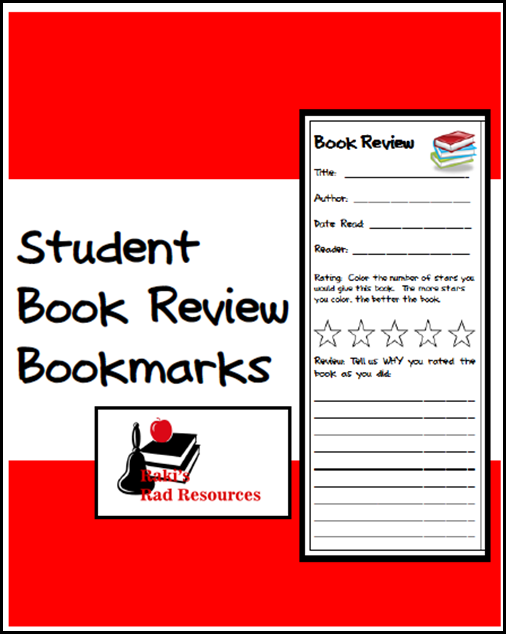
Resources to keep students reading books they enjoy while keeping them accountable for their learning.  Resources from Raki's Rad Resources - book review bookmarks


Be the Teacher Sheets

Resources to keep students reading books they enjoy while keeping them accountable for their learning.  Resources from Raki's Rad Resources - be the teacher sheet


Online Book Report (Free Download)

Resources to keep students reading books they enjoy while keeping them accountable for their learning.  Resources from Raki's Rad Resources - online bookreport


Of course it is always helpful to have some great books hanging around for students to choose from.  Check out my post on 10 Authors that Should Be in EVERY Elementary Classroom to find great book suggestions.

Heidi Raki of Raki's Rad Resources

Monday, October 27, 2014

Differentiated Center Activities

Centers are not one size fit all!  All instruction should be differentiated to meet the needs of students, including math and literacy centers.  Stop by Raki's Rad Resources for ideas and resources.

Center activities – available in rotations or checklists (Click HERE to see my rant post on why I don’t do center rotations.) - give teachers the perfect opportunity to differentiate and truly meet the needs of our students.  During literacy or math centers, students DO NOT have to be doing exactly the same thing, that is the nature of this time.  However, I often see many teachers who have all students rotate through three IDENTICAL centers and the only time that students are receiving any individualized consideration is when they are at a teacher’s guided reading/ guided math table.  In my opinion, this is a complete waste of what could and should be individualized instructional time. 

Of course, setting up more individualized instructional centers requires a bit more set up. One key to simplifying the process is to have similar, but different, centers available, so that students are working on the same concept, but at different levels.


For example, when I taught 1st grade, my literacy centers most often looked like this:

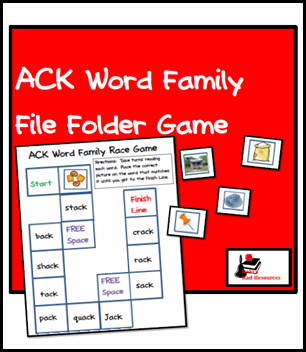
Word Family Station #1 - Playing with Word Families: Students were assigned to either work on self-correcting puzzles (for my lower level students) or file folder games (for my higher level students).   

Centers are not one size fit all!  All instruction should be differentiated to meet the needs of students, including math and literacy centers.  Stop by Raki's Rad Resources for ideas and resources - ACK family self correcting puzzle     Centers are not one size fit all!  All instruction should be differentiated to meet the needs of students, including math and literacy centers.  Stop by Raki's Rad Resources for ideas and resources - ACK family file folder game

Word Family Station #2 - Reading Word Families: Students were assigned to either read word wall cards and match them with other word wall cards that had the same word (for lower level students) or making word centers (for my higher level students).


Centers are not one size fit all!  All instruction should be differentiated to meet the needs of students, including math and literacy centers.  Stop by Raki's Rad Resources for ideas and resources - ACK family word wall cards    Centers are not one size fit all!  All instruction should be differentiated to meet the needs of students, including math and literacy centers.  Stop by Raki's Rad Resources for ideas and resources - ACK family making words center


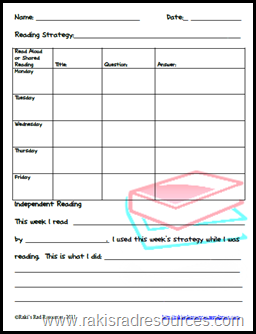
Independent Reading Station:  Students chose books from leveled boxes and read, and complete their reading journal.

 Centers are not one size fit all!  All instruction should be differentiated to meet the needs of students, including math and literacy centers.  Stop by Raki's Rad Resources for ideas and resources - primary reading journal

Listening Station:  Students listened to self selected stories from a variety of bookmarked story reading websites.  (Find great websites for listening centers in this blog post.)  Then, they shared information about what they learned on a simple listening log.

Centers are not one size fit all!  All instruction should be differentiated to meet the needs of students, including math and literacy centers.  Stop by Raki's Rad Resources for ideas and resources - listening center


In addition to differentiating by general ability, I would often differentiate the word family centers with which word family different students were working on, giving lower level students the chance to re-do the same word family over and over until they achieved success and built fluency and allowing the higher level students to challenge themselves with more difficult word families and harder vocabulary.  Each center started out the year with 41 different word families available and students chose the word families that were assigned to them.

Since I don’t rotate, my students did not move in set groups, so I would have a laminated class list at each center.  At the beginning of the week, I would note word families I would like each student to work on next to their names – using a dry erase marker.  This was a simple way of changing out my centers often without having to do much work. 


This concept can also be used in math.  When I taught 3rd grade, my math centers would most often look like this:


Calendar Books:  Students each received different calendar books, depending on their level.  The covers looked the same and everyone had the same “number of the day”, so it looked like everyone was doing the same thing.  However, my low level students were working on basic number properties like expanded notation and base ten blocks while my higher level students were multiplying and dividing the same number by 10 and 100.

Centers are not one size fit all!  All instruction should be differentiated to meet the needs of students, including math and literacy centers.  Stop by Raki's Rad Resources for ideas and resources - calendar books   Centers are not one size fit all!  All instruction should be differentiated to meet the needs of students, including math and literacy centers.  Stop by Raki's Rad Resources for ideas and resources - calendar books


Fast Fact Practice:  I laminated fast fact quizzes and put them in a center with a kitchen timer.  Students practiced those facts over and over with a dry erase marker and a tissue.  Each quiz was hole punched and organized into a binder by operation. Like with word families, I keep a laminated class list at this center so that students knew which level to work on.


Centers are not one size fit all!  All instruction should be differentiated to meet the needs of students, including math and literacy centers.  Stop by Raki's Rad Resources for ideas and resources - Addition Fact Quizzes    Centers are not one size fit all!  All instruction should be differentiated to meet the needs of students, including math and literacy centers.  Stop by Raki's Rad Resources for ideas and resources - Division Quizzes

Problem Solving Practice:  My students used Problem Solving Path for problem solving practice, which isn’t differentiated, except by grade level.  However, students worked through each monthly journal at their own pace, so some students completed all 10 journals in the course of the year, while others only completed 4.  (I did set a requirement of at least one per trimester, simply to cover required grades.)


Centers are not one size fit all!  All instruction should be differentiated to meet the needs of students, including math and literacy centers.  Stop by Raki's Rad Resources for ideas and resources - Problem Solving Path


Critical Thinking Practice:  Students used tiling puzzles to work build their critical thinking skills.  Students were given their puzzles as a stapled packet of 10 puzzles, differentiated by their level (some starting with addition, others multiplication).  As students completed one packet, they would turn it in for a No-Homework Pass, and the next level of puzzles. 


Centers are not one size fit all!  All instruction should be differentiated to meet the needs of students, including math and literacy centers.  Stop by Raki's Rad Resources for ideas and resources - tiling puzzles     Centers are not one size fit all!  All instruction should be differentiated to meet the needs of students, including math and literacy centers.  Stop by Raki's Rad Resources for ideas and resources - tiling puzzles


Since I did so much differentiation, I now have a TON of resources that are available at different, differentiated levels.  Take advantage of this to save time in your own classroom and download any of the resources I discussed in this blog post at my Teachers Pay Teachers store. 


How do you offer your students a differentiated/ individualized center experience?

Heidi Raki of Raki's Rad Resources

Sunday, August 24, 2014

Keeping Kids Reading – 10 Ways to Get Kids to Enjoy Reading

Getting kids to enjoy reading is the most important step to creating life long readers.  Find 10 tips getting kids to enjoy reading.  Heidi Raki of Raki's Rad Resources

Building a culture of reading in our classrooms is an important step to creating life long readers.  Kids who enjoy reading read more.  Kids who read more become better readers.  Better readers enjoy reading.  And the cycle continues. 

This – and what I’ve seen in action in my classroom - leads me to conclude that getting kids to enjoy reading is an essential part of building good readers.  So, here are some tips to helping students enjoy reading and develop the skills to be life long readers:

Getting kids to enjoy reading is the most important step to creating life long readers.  Find 10 tips getting kids to enjoy reading.  Heidi Raki of Raki's Rad Resources - Read Aloud Journal 1.  Introduce students to different genres and authors through read aloud.  Exposing students to books they wouldn’t think to choose for themselves is a great way to get kids enthusiastic about reading different kinds of books.  I always start the year out with a few authors that I love, to expose kids to quality books on a variety of topics.  Find some of the authors I love in my blog post – Authors that Belong in All Elementary Classrooms.  In addition to listening to books read aloud, I encourage my students to utilize their reading comprehension skills during read aloud, using my Read Aloud Journal.  This helps kids understand that these strategies are something they do every time they “intake” information, in any format.

Getting kids to enjoy reading is the most important step to creating life long readers.  Find 10 tips getting kids to enjoy reading.  Heidi Raki of Raki's Rad Resources - Self Selected Novel Study 2.  Let kids choose the book.  Just as important as it is for us to expose students to books and authors that we love, it is also important to take time to let them read about something they love.  My 5th grader currently LOVES World War 2 (don’t ask), so I have encouraged him to read Number the Stars, Anne Frank’s Diary, and Farwell to Manzanar.  My 2nd grader is head over heals for Captian Underpants (and anything to do with bodily functions – again, don’t ask), so we have made sure he had access to the entire series.  These self chosen books don’t have to just be for pleasure reading either.  We are using my Generic Novel Study Packet, which works with any book, to do a full novel study on books that THEY have chosen.  Knowing that there are books out there that make them happy – while keeping their teacher happy – is a priceless moment for most kids.

Getting kids to enjoy reading is the most important step to creating life long readers.  Find 10 tips getting kids to enjoy reading.  Heidi Raki of Raki's Rad Resources - Encouraging kids to read on an e-reader3.  Encourage reading in other places than just paper books.  Whether it’s an E-Reader, reading articles on the computer or an online magazine, there are so many places to read online books that capture the interest of your “screen kids”.  My family is a Kindle family – we have 3 kindles registered to our household.  However, there are TONS of other places to find online books and access to online articles.  Check out my blog posts – Free E-Books for Kids and Top 10 Reading Websites for Kids to find some great places to allow kids to take reading into the virtual world, their world.

Getting kids to enjoy reading is the most important step to creating life long readers.  Find 10 tips getting kids to enjoy reading.  Heidi Raki of Raki's Rad Resources - Reading Response Journal 4.  Get students to think and write about the books they are reading.  When kids start thinking about what they are reading – connecting it to their own life experience, to movies they have read, thinking about the big ideas and themes – they not only better understand what they read, but they start to enjoy what they read more, because it now has impacted their life in a new way.  One way that I help students to think about the books they are reading is by having them write responses in their weekly Reading Response Journal.  With a different prompt each week, kids are encouraged to look at different parts of their books than they would normally focus on.  This extension of their thinking also encourages more enjoyment in the books they read.

5.  Let kids be creative with the ways that they report about a book.   There are so many more ways to do a book report than simply to summarize the book in an old fashioned book report.  In my class, we did Online Book Reports, where students choose to make an online project (like a Prezi or LiveBinders) or a video with the information from the book.  Students get so much more engaged with the books when creating these projects and their classmates love viewing the projects.  Often, after we present Online Book Reports, the books presented became the most checked out books of the class library.

Getting kids to enjoy reading is the most important step to creating life long readers.  Find 10 tips getting kids to enjoy reading.  Heidi Raki of Raki's Rad Resources - Writing Book Reviews 6.  Have kids write recommendations to each other about the books they read.  Kids are much more likely to read books recommended by other kids than by us – just like we are more likely to read a book recommended by our friends than by our parents.  In my class, we complete Book Review Bookmarks and hang the recommendations around the class library.  Kids love choosing books recommended by their friends.

7.  Read in fun places! Books – and other reading materials – are extremely portable.  Have your students take their books outside to read under a tree.  Read laying on your bellies.  Bring in beach towels and spread them out in the grass.  Read in the hallway.  Encourage kids to read in the car, in bed, by the pool, wherever they can take a book.  Reading in different places will give students new, hopefully pleasant, memories with their books Getting kids to enjoy reading is the most important step to creating life long readers.  Find 10 tips getting kids to enjoy reading.  Heidi Raki of Raki's Rad Resources - Buddy Readingand encourage them to try reading at many different times in many different ways.

8.    Read with book buddies. Reading with older or younger students give students a chance to practice their fluency, make new friends and discover new books.  The books they read with their buddies will be further cemented in their brains by this new experience and they will be encouraged to read new kinds of books and make new kinds of friends.

Getting kids to enjoy reading is the most important step to creating life long readers.  Find 10 tips getting kids to enjoy reading.  Heidi Raki of Raki's Rad Resources - Reading for a purpose with internet research and internet scavenger hunts 9.  Give students a purpose for reading.  Having students read to find information gives them a purpose behind their reading.  Children will read books and articles that are new and challenging to them if they are dedicated to their purpose.  Children working on genius projects or internet scavenger hunts have a new motivation to read things they wouldn’t even consider reading otherwise.  Then, once they realize they can do it, they are motivated to read new and different things.

Getting kids to enjoy reading is the most important step to creating life long readers.  Find 10 tips getting kids to enjoy reading.  Heidi Raki of Raki's Rad Resources - Keep track of reading on a reading log 10.  Have students keep track of their reading.  Using any type of reading log helps students to keep track of how much and what kind of books they have read.  Keep a year’s worth of reading logs together in one notebook and let kids look back at the end of the year, to take pride in the wide range of amazing books they have enjoyed this school year.

Heidi Raki of Raki's Rad Resources

Thursday, July 24, 2014

Authors to Have in Your Classroom

Recently, I asked a group of teacher friends (okay I asked Facebook, lol) if you could have one book for your classroom, what would it be.  Of course, no one could choose just one and many simply said anything by “this author”.  So, I decided to make a list of authors that should be in EVERY classroom, and when I got to thinking of it, I remembered how powerful author studies were to my students in the past. 

To do an author study with your class, take the time to read at least 2 books aloud or in novel studies with your Read Aloud Journal - Help students understand what they read through this daily read aloud journal.students.  Compare and contrast the books.  Then, look at the biography and bibliography of the author.  Finally, challenge students to read more books by this author, keeping track and continuing to compare and contrast the various books as they read.  Authors studies are great times to talk about a writer’s style and voice, as well as genre. 

Here are the authors my teacher friends thought were worth reading.  All of these authors have great books for read alouds.  Choosing one author and using their books to start out your Read Aloud Journal at the beginning of the school year is a great way to get kids focused on reading from Day 1.

10 authors that should be in every elementary classroom: Dr. Seuss, shel silverstein, chris van alsburg, eric carsle, chris van alsburg, mary pope osborne, david weisner, judy blume, patricia polacco, judy blume, roald dahl

dr. seuss

1.)  Dr. Seuss (Yertle the Turtle, Oh the Places You’ll Go!, If I Ran the Zoo, And To Think I Saw it on Mulberry Street)


shel silverstein2.)  Shel Silverstein (The Giving Tree, A Light in the Attic, Runny Babbit, Where the Sidewalk Ends, A Giraffe and a Half)


Chris van alsburg3.)  Chris Van Alsburg  (Polar Express, The Stranger, Two Bad Ants, Jumanji, Queen of the Falls)

Eric Carle4.)  Eric Carle (The Very Hungry Caterpillar, A House for Hermit Crab, Pancakes, Pancakes, The Artist Who Painted a Blue Horse)

Mary Pope Osborne5.)  Mary Pope Osborne (The Magic Tree House Series, American Tall Tales, One World, Many Religions)

David Weisner6.)  David Weisner (Flotsam, Tuesday, Mr. Wuffles, Free Fall)

Julia Donaldson7.)   Julia Donaldson (The Gruffalo, The Snail and the Whale, A Squash and a Squeeze, A Gold Star for Zog)

Patricia Polacco8.)   Patricia Polacco (Thank You Mr. Falker, Thunder Cake, The Keeping Quilt, Babushka’s Doll, Chicken Sunday)

Judy Blume9.)   Judy Blume (Freckle Juice, Tales of a Fourth Grade Nothing, Superfudge, Iggie’s House)

Roald Dahl10.)  Roald Dahl (Charlie and the Chocolate Factory, James and the Giant Peach, Matilda, The Wonderful Story of Henry Sugar)

What authors would you add to the list?

Heidi Raki of Raki's Rad Resources