Showing posts with label reading. Show all posts

Sunday, April 10, 2016

2nd Grade Lesson Plans - Week of April 11th

When I was teaching in a multiage classroom overseas in Morocco, I often posted my lesson plans here on my blog. Now that I am back in the classroom, I have had some requests from readers for the sneak peek into my classroom that sharing my lesson plans allowed others. So here is what my class is up to this week:


2nd Grade Lesson plans for reading, phonics, writing and math - from Heidi Raki of Raki's Rad Resources

In the morning, we start out with Phonics/Writing Centers. This week we are focusing on the Long E spelling patterns. My students work independently on their Long E Spelling and Vocabulary Packet. 

Also during our morning block we work on writing. One of the great weaknesses for my class as a whole is writing conventions (capitals, punctuation and application of the spelling patterns we have learned), so every week we work on writing to a writing prompt. This week, my students will work on my Freddy Fish Writing Prompt (which you can download for free from my old blog post - 10 Free Writing Prompts). This writing prompt is graded strictly on conventions and gives me a great piece to conference with each child on using good conventions in their writing. 
After I have conferenced with each child on the conventions from last week's writing prompt, I will pull small groups and we will work on our persuasive writing. Right now we are working on the first prompt from my Opinion Writing Journal, which asks the students to write about the best book they have ever read. Most of my groups have finished brainstorming and are well into drafting. This week we will finish drafting and begin the process of editing and revising.


2nd Grade Lesson plans for reading, phonics, writing and math - from Heidi Raki of Raki's Rad Resources

Our second block of the day is reading. We start out the reading section working on reading fluency. First we review our weekly nursery rhyme. The students are working on their Nursery Rhyme Response Sheets for homework, but we review the rhyme each day in class to help build fluency. Students also do one minute partner fluency checks using their weekly passages, which I have pulled from Read Works. (You can find the link for Read Works and other places to pull reading passages at this old blog post: Preparing for Reading Comprehension Standardized Tests.) 

Once we have finished our fluency checks, we will work on building a chart with the characteristics of different types of poetry. We have already read quite a few Shel Silverstein poems and classic nursery rhymes, but this week we will read a bunch of traditional rhyming poems and them to our chart.
Finally, we will move into guided reading. While I pull guided reading groups, my students work on a variety of reading comprehension activities using their weekly passage. After they have finished that day's comprehension activity, they have time to read independently. 
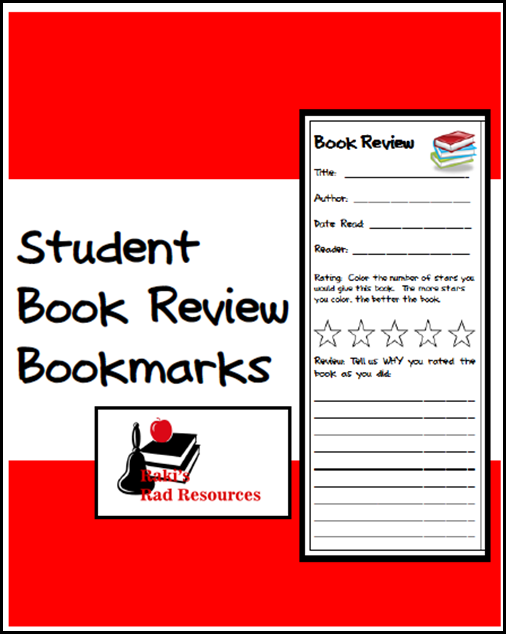
This class has many new readers who have never built up the stamina for silent reading. So I am promoting reading books from cover to cover by tracking the number of on level books each student reads. My students are also completing Book Review Bookmarks on some of the books they read, which we are displaying in our class library in order to encourage other students to read books their classmates have enjoyed.

2nd Grade Lesson plans for reading, phonics, writing and math - from Heidi Raki of Raki's Rad Resources

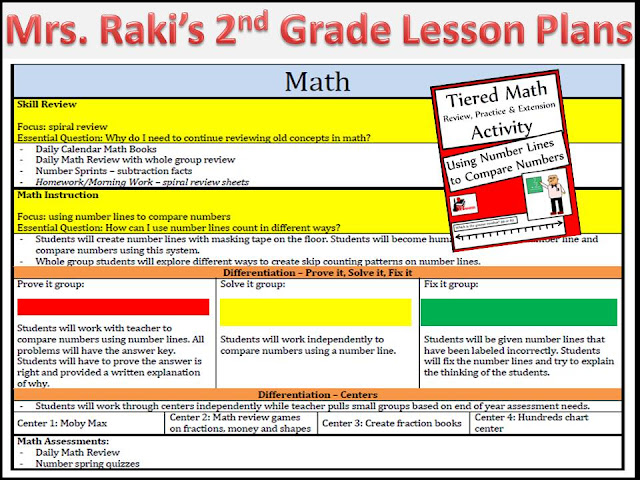
After lunch, we move into Math. First we start with our daily routine of Calendar Books and Fast Facts Quizzes, which my kiddos call number sprints. The Calendar Books allow us to review multiple number concepts every day, including adding and subtraction 1, 5 and 10 and creating a number using base ten blocks and coins. The Fast Fact Quizzes help us to build number fluency. We are currently working on Subtraction Fast Facts, but by the end of the week I am sure that at least a few of my students will move onto the Addition/Subtraction Mixed Facts.

During these last six weeks of the school year, we are reviewing key concepts that students are still struggling with. Before Spring Break, the students took an assessment covering all of the standards covered this year. Last week we worked on skip counting with my Tiered Skip Counting Math Activity. This week we are working on number lines using my Tiered Number Lines Math Activity. 
I have split my students into three groups, using their data from this end of the year assessment. The prove it group will work with me to prove that the answers of three comparing numbers problems are correct by labeling and using number lines. The solve it grup will answer three comparing numbers problems, using number lines. The fix it group will "fix" number lines that have been mislabeled by common student mistakes. 
Once students finish their tiered activity, we move into math centers. Most of the students will be working on Moby Max and finishing up the creation of their fraction books. But my "fix it group" from last week's skip counting tiered activity will also spend time finishing the videos that they planned last week using my Video Planning Sheets. Their videos will teach others about skip counting and I am very impressed a their ideas. One group is trying to replicate an Odd Squad type of episode. Another group is teaching skip counting by subtracting life points when playing Yu-Gi-Oh. All of the groups are definitely extending their understanding by creating these videos.

So that's what my class is doing this week. What's your class doing?


Sunday, February 28, 2016

Preparing for Reading Comprehension Standardized Tests

Five test prep strategies to help students succeed on reading comprehension standardized tests from Raki's Rad Resources

Last week my students took a quiz on a passage that they had read more than five times. The students could create a story map on the story. They could identify the characters, the setting, the problem, the solution. They could each tell me the main idea and some supporting details. However, they ALL failed the quiz. Why did this happen? Well with some reflection we realized that most of the questions called for the students to utilize test taking skills. 
As much as I would prefer to assess my students' understanding based on projects, essays and written short response questions where students can justify and explain their thinking. Unfortunately the reality is that most of our standardized assessments are multiple choice questions that require students to understand how to take a test. So I often find myself in need of finding a compromise, a way to teach students about taking a test without teaching "to the test". Here are the top five things that I do to prepare my students for standardized reading tests:

1.) Teach students the important things to look for. There are many cute mnemonics out there like UNRAVEL that give students the important things to look for in test questions, but I have found that these often get students focused on memorizing the mnemonics instead of really focusing in on what they need to know. Also many programs will focus on circling one thing, underlining another, etc. and then students get so focused on what they're supposed to do they forget what they're supposed to look for or how to actually answer the question. So instead, I make my students a poster like this one of important things to look out for. If you'd like to use this poster with your kiddos, feel free to grab it for free from my Teachers Pay Teacher store.

Reading comprehension test taking strategies - free download from Raki's Rad Resources


2.) Model test taking strategies. There are a few websites out there that provide you reading passages and questions that you can use to model test taking strategies with your students. Modeling can happen in a whole group or small group setting. If you have access to a projector or document camera, it is very easy to go through the process together with the students mimicking on their papers what you are doing on the screen. Here are a few websites with passages and questions:

 - Readworks.org - This website includes grade and lexile leveled passages and questions, which provides for easy differentiation.

 - Teachnology - There are many passages on this site, but they are not leveled in any way.

 - Moby Max - With a free account you can go through a story and questions on a student's account. While you can't print out the stories, they are a bit more interactive than other passages.

- Reading A - Z - This service does come at a cost, but the cost provides you with tons of books and passages that have quizzes, comprehension sheets and lesson plans.


Making your own test taking questions - downloadable resource from Raki's Rad Resources
3.) Allow students to prepare their own questions. After you have looked at the types of questions that are commonly used in standardized tests, allow students to write their own test questions from books they have read, newspaper articles, or any of the passages on these websites, which provide passages but no questions. Students will work on test preparation, critical thinking skills and have fun being the teacher. At my Teachers Pay Teachers store, I have a simple Kids Create the Test sheet that can be used for this type of activity.

Websites with passages but no comprehension questions:

 - K5 Learning

 - McGraw Hill

 - K12 Reading (Includes open ended comprehension questions)

 - RHL School

 - Teacher's Guide


reading response journal - downloadable resource from Raki's Rad Resources
4.) Require students to justify their answers and think about the text in multiple formats. Specifically if your students are taking the PARCC as their standardized assessments, they are going to be required to give proof and justify their answers. For this reason we need to make it a part of our daily routine to ask our students "Why do you think this?" or "Where in the story did you find that information?" I always ask my students to include this information in their weekly reading response journal entries. Included on the rubric is to "give information from the text to support their thinking". The more our students are thinking about why their answers are correct, the more likely they are to actually be correct.

5.) Teach specific lessons about "outside knowledge" types of questions - author's purpose, vocabulary, genres. A percentage of standardized test questions have little to nothing to do with comprehending the passages that the students are reading. Instead they are about the difference betwen science fiction and historical fiction or the meaning of a key vocabulary word. While these are important skills, they aren't the same as just understanding the passage, so we need to teach students about how to answer these types of questions. And of course we need to teach them about these concepts because that is what these questions are really testing, how well we've covered these additional text concepts. So be sure to spend some time teaching students about genres, author's purpose, reading strategies vocabulary and identifying the meaning of a vocabulary word by using context clues. I personally do two big mini lessons on these concepts at this time of the year, one on genres and the other on reading strategies, specifically the vocabulary of questions using reading strategies. Both of these power point lessons can be found in my Teachers Pay Teachers store.

genre power point - downloadable resource from Raki's Rad Resources


reading strategies power point - downloadable resource from Raki's Rad Resources


Of course all of these test taking strategies are moot if students can't decode and comprehend the passages, so the most important thing that we can do for our students is to give them a solid base in reading by building phonics skills (see my phonics program), vocabulary (see my spelling and vocabulary programs) and comprehension skills (see my reading journals and in depth novel and book studies). 


Thursday, June 25, 2015

10 Ways to Encourage Students to Read Independently


Encouraging students to read independently is one of the most important things that we can do to help our students become better readers. Kids who enjoy reading read more and build their vocabulary and comprehension strategies at a faster rate. In addition, books increase the background knowledge students have and help them better relate to other books, as well as topics covered in science and social studies. Independent reading is important during the school year, but also during school breaks and over the  summer.  Here are some suggestions on how to encourage independent reading that could be used during the summer months or at any other time during the school year:


1.) Connect with an extrinsic reward program. While it is extremely important to make reading intrinsically rewarding, sometimes we need a bit of a carrot to get our reluctant readers to pick up the first book. There are lots of reward programs already out there through libraries and private companies that let students read a certain amount of time in order to win a prize. Often I find that once students start reading to accumulate their hours, they get “hooked” into a book or series and read much more than the designated amount of time, because they have found some intrinsic reward as well!  Some reading reward programs to check out are: Six Flags Read to Succeed, Pizza Hut’s Book It Program,  Scholastic Summer Reading Program and Barnes and Noble’s Imagination’s Destination.


2.) Suggest alternatives to novels and picture books. Some students don’t get into what we think of as traditional reading material, but at the end of the day, reading is reading and all types of reading can help students become better readers. Try suggesting alternative reading sources to help hook your reluctant readers and to push your avid readers out of their boxes. Some possibilities for alternative reading sources would be: comic books, non-fiction books, reference books, blogs, websites, brochures, newspapers, etc.

3.) Encourage travel reading. This suggestion is especially pertinent during summer and school holidays, as many students travel or go to local attractions. However, travel reading can be fun all year long if you bring it into the classroom. Students can learn a lot from travel brochures, travel blogs, destination websites, and pamphlets picked up at different destinations. My children love to pick up brochures from hotels and rest stops. If your students won’t regularly have access to these types of materials, consider picking some up on your next trip and keeping them in your class library. If you want to encourage some cross curriculum learning, you might want to consider combining this reading with my Planning a Field Trip Math Project as well!


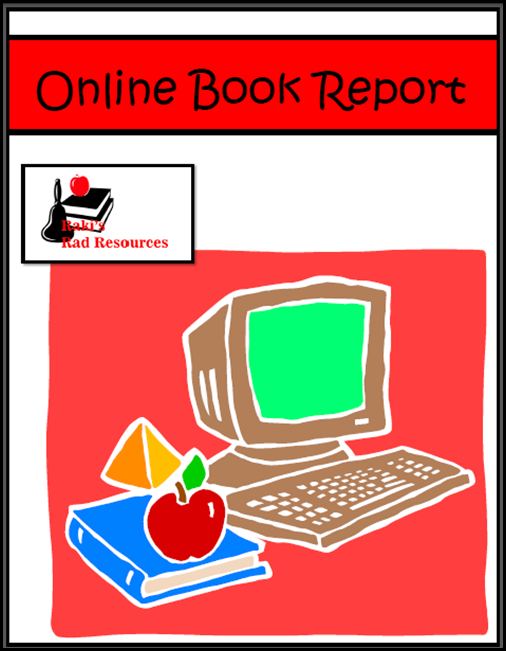
4.) Give students to respond to books they read in fun ways. Kids love watching movies based on books, why not give them the opportunity to create a movie, or a movie trailer, or some other fun projects based off of a book they read. This can be a fun “reward” when they finish a book from a suggested list, which might encourage them to read books they wouldn’t have found on their own or simply a way of responding to any book chosen independently. For specific suggestions on possible book projects, check out my Online Book Report format which is a free download at my Teachers Pay Teachers store.


5.) Host a book club through Edmodo or Google Docs.  Adults participate in book clubs all the time, why can’t kids? Hosting book clubs in class is great, but if you choose to do book clubs online, you can include students from other classes, other schools, even other countries. Book clubs can be done rather simply using either Edmodo or Google Docs. Simply discussion questions and guidelines and let the kids go at it. Kids can read books in pieces or be asked to read the entire book by a certain date. Students can all “meet” online or go online at their convenience. There are so many possible ways to work online book clubs, but no matter how they are run, they provide students with a great way to interact with others about books they have read and encourage students to read new, interesting books.


6.) Create a Selfie Book Pic Project. We all know that kids like taking selfies, how about asking students to take a selfie of themselves reading books in different places? This would work really well for school holidays or summer break, but could be done as weekend or even evening homework. Ask kids - Where do you read at home? In your bedroom? In a tree house? At your sibling’s soccer practice? Collect all of the selfies into a bulletin board or ask students to create a photo album of themselves reading.  For suggestions on how to create online photo albums, check out this old blog post called: Using Photobucket In the Classroom.

7.) Provide author or book suggestions. Some students think all books are boring. One great way to prove them wrong is to provide them with book or author suggestions that will intrigue them. Find out their interests and suggest books that appeal specifically to them. My 7 year old is obsessed with gross out humor. His favorite books are Captain Underpants and Weird, but True. Just because kids don’t like the books you like doesn’t mean there’s not a great type of book out there for them!


8.) Read a Preview Chapter.  Use read aloud to get kids interested in new, interesting books by previewing books with them. Choose a variety of books. Each day over the course of a week or two, introduce a book to your students. Talk about why the book is interesting and then read them a chapter or a few pages, just enough to get them hooked. Think of it as a movie trailer, give them just enough to get them interested in reading it on their own. Then leave those books in your classroom library, or give them a list to possibly check out from the school or public library.


9.) Start students on a book blog. Whether you have students each create their own book blog, or you create a collaborative class book blog, this could be a great way to keep track of what they have read and encourage others to read books they have enjoyed. Students don’t need to write long blog posts – a quick critique would do the job, although more advanced readers may be asked to do a summary. They could include a picture of the book – or even one of those selfies! – and a link to where other people could find more information about the book. Not only will students enjoy sharing the news about what they read with the world, they can get ideas about new books to read by looking at their classmates’ blog posts.


10.) Create a Genre Challenge. Students often get stuck in one genre and forget there are plenty of different kinds of books out there. Get kids out of their box by challenging them to read at least 3 books from a new genre. Encourage students to read science fiction, fantasy, non-fiction, historical fiction, narrative, poetry, etc. Perhaps students will find out that there is a whole world of books out there that they never thought to read before!


I hope that some of these suggestions will help you encourage your class to read more and read independently. A teacher’s main job is to inspire the love of learning and reading is learning. If you have another great idea for us, please feel free to share in the comments, as we build a community of learners right here at Raki’s Rad Resources.


For more posts about reading check out:
Top 10 Reading Websites for Kids
Book Reviews for Kids
Online Books for Kids


Top 10 Authors to Have in Your Classroom

Monday, March 16, 2015

Kids Need to Read Books They Enjoy!

Resources to keep students reading books they enjoy while keeping them accountable for their learning.  Resources from Raki's Rad Resources.

There are so many amazing books available for kids.  Children should read quality books that interest them every day.  The more students enjoy what they are reading, the more attention they will pay to what they are reading and the better they will comprehend it.  However as teachers we are often worried about how we will know if students have comprehend the books they are reading if we haven’t read them ourselves.  So we give them a specific group of books to choose from and have comprehension questions ready. 

Teachers need accountability.  Kids need the freedom to read what they enjoy.  So in my classroom I worked to a compromise.  The kids could read anything that they wanted, as long as it was fairly close to their level, and they completed some sort of accountability measure.  In order to allow my students to reading books that interested them but still be held accountable, I have created resources that could be used with any book students chose.  They check that students are using reading comprehension strategies and force students to think about the book – whatever book they choose.

Here are a few resources that allow students to read any book they choose but still practice reading comprehension strategies:


Primary Read Aloud Journal

Resources to keep students reading books they enjoy while keeping them accountable for their learning.  Resources from Raki's Rad Resources - primary reading journal


36 Week Reading Response Journal

 Resources to keep students reading books they enjoy while keeping them accountable for their learning.  Resources from Raki's Rad Resources - reading response journal


Weekly Reading Logs

Resources to keep students reading books they enjoy while keeping them accountable for their learning.  Resources from Raki's Rad Resources - readinglogs


Student Selected Novel Study

Resources to keep students reading books they enjoy while keeping them accountable for their learning.  Resources from Raki's Rad Resources - self selected novel study


Non-Fiction Book Study for Any Book

Resources to keep students reading books they enjoy while keeping them accountable for their learning.  Resources from Raki's Rad Resources - NonFiction Book Study


Story Elements Bookmarks

Resources to keep students reading books they enjoy while keeping them accountable for their learning.  Resources from Raki's Rad Resources - Story Elements Bookmark


Book Review Bookmark (Free Download)

Resources to keep students reading books they enjoy while keeping them accountable for their learning.  Resources from Raki's Rad Resources - book review bookmarks


Be the Teacher Sheets

Resources to keep students reading books they enjoy while keeping them accountable for their learning.  Resources from Raki's Rad Resources - be the teacher sheet


Online Book Report (Free Download)

Resources to keep students reading books they enjoy while keeping them accountable for their learning.  Resources from Raki's Rad Resources - online bookreport


Of course it is always helpful to have some great books hanging around for students to choose from.  Check out my post on 10 Authors that Should Be in EVERY Elementary Classroom to find great book suggestions.

Heidi Raki of Raki's Rad Resources

Friday, March 6, 2015

Novel Study Made Easier on the Kindle

My oldest son is doing a novel study of The Hunger Games for his reading curriculum this trimester.  He is using my Student Selected Novel Study Packet, which works with pretty much any novel out there, which is perfect for homeschooling although I actually designed it to make differentiation easier when I was teaching in a classroom with many levels.  My son is reading the book 2 chapters at a time. After each set of two chapters, he has 4 pages of work to do.


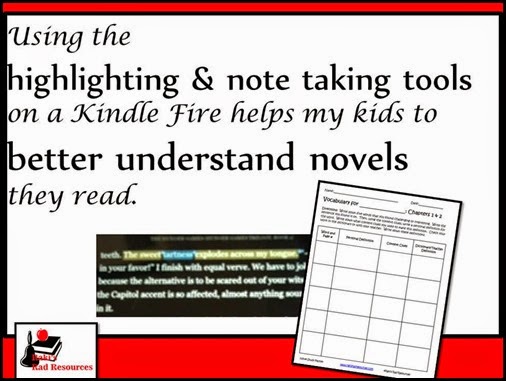
Using the highlighting and note taking tools on a kindle fire has helped my child to better understand the novels he reads.  He uses the highlighting tool to help him think better about what he reads.  Curriculum suggestions from Raki's Rad Resources.

On the vocabulary page, he finds 5 words, uses context clues to guess the meanings and then looks up the definition in the dictionary.  Since he is reading on the novel on his Kindle Fire, he has developed a system of highlighting the words and the context clues in two different colors while he is reading.  This enables him to find the words easily when it comes time to do his vocabulary page.  Since his Kindle Fire also has a built in dictionary, that step is much faster too!


Using the highlighting and note taking tools on a kindle fire has helped my child to better understand the novels he reads.  He uses the highlighting tool to help him think better about what he reads.  Curriculum suggestions from Raki's Rad Resources.

Next, he does a summary of what happened in these two chapters by completing a story map.  While he is reading, in yet another color, he highlights key events that he wants to remember for his story map.  He can even type in his own notes to go with highlighting.  No more lost post-it notes, but lots of good thinking while reading going on!


Using the highlighting and note taking tools on a kindle fire has helped my child to better understand the novels he reads.  He uses the highlighting tool to help him think better about what he reads.  Curriculum suggestions from Raki's Rad Resources.


The third page he works on is creating three quiz questions based on the chapters he has read.  He sometimes uses highlighting for this as well, since he likes to pick out minute details for his quiz questions.  We are working on including at least one big idea or inferencing question, forcing him to think further outside the box.


Using the highlighting and note taking tools on a kindle fire has helped my child to better understand the novels he reads.  He uses the highlighting tool to help him think better about what he reads.  Curriculum suggestions from Raki's Rad Resources.

Finally, he completes a reading response page where he writes about the chapters while responding to a prompt.  This has been a great way to see what he has taken from the chapters.  He likes that there is a rubric on the bottom of the page so he knows exactly what he needs to include in his writing.  In fact, he told me he wishes every page he ever did has a rubric so that he isn’t left wondering if what he’s doing is going to be what we’re looking for.

  Using the highlighting and note taking tools on a kindle fire has helped my child to better understand the novels he reads.  He uses the highlighting tool to help him think better about what he reads.  Curriculum suggestions from Raki's Rad Resources.

If you’re interested in having your students work on a Self-Selected Novel Study, you can find the entire packet including the pages shown for up to 30 chapters and pages for before and after reading the novel.  A Kindle Fire is NOT needed to complete the packet, but it definitely makes the note taking processes easier!!

Heidi Raki of Raki's Rad Resources