Saturday, June 16, 2012

Top 10 List of Summer Reading for Teachers

All of those that say that teachers don’t work in the summer don’t realize the amount of professional development that teachers do over the summer.  Some of the professional development goes on via workshops and other organized activities.  However, I have found that many teachers complete their professional development through self-led activities like blog stalking and independent reading.  If you are in the second category, here are some great books to try out this summer.  Some of these I have read and some of these are on my summer reading list.

1.)  Tribes – I read this book during my first year teaching, and it impacted me so much.  It gives great strategies to use to create a true collaborative learning experiences in your class and school.

2.)  Understanding by Design – Here’s another one I read that first year.  This shows you how to use the Backwards Design model of lesson and unit planning to ensure that you have teach and assess the standards you set out to teach. 


3.)  The First 6 Weeks – My school did a book study on this a few years back, and it was great for helping me re-think my schedule and start strong to build a great school year.


4.)  Strategies That Work – This book change the way that I teach reading all together.  Not only does it fully explain the processes readers go through while they are reading, it gives great examples for how to teach these strategies to your students.


5.) Awakened – I just got this for my Kindle and I can’t wait to read it, so that I can start next school year out more focused.  This book shows you how to focus on the important stuff and stay motivated in teachers. 


6.)  The Daily 5 – With all the hype about this book, I’ve actually only looked at the website, but even that information made my reading centers better this year.  Over the summer, I’m going to read the book, so that I can do it right next year!


7.)  Making Content Comprehensible for English Learners – The SIOP Model – I read this book a few years back, and it had such an impact on how I teach my English Language Learners.  The strategies included were great for all of my students, but had a particular impact on my language learners.


8.) Trait Based Mini Lessons for Teaching Writing – I’m trying to take my writing instruction to the next level, and so I’m in the middle of this book right now.  It has great ideas and is written very clearly. 


9.)  Lucy Calkins – The Art of Teaching Writing – I have heard that this is a clear, easy way to get in all the pieces of the writing process, so it is also on my summer reading list.


10.)  The Right Moment – I received this book as an end of the year gift from my principal last year and it has been wonderful.  It’s a book full of quotes, but it has been great to look at and get some inspiration or perspective on those tough teaching days.


What are you reading this summer?  What books would you suggest for other teachers?

signature

Friday, June 15, 2012

Hungry, Hungry, Hippo Math

I LOVE to play board games at home, but I also enjoying using them in my classroom. In addition to encouraging cooperation, turn taking and a variety of other social skills, I find I can often use the games to work on math and literacy skills. So, every Friday, I am going to post a Friday Game Night post, giving tips on how to use a particular board game in your classroom. Here’s this week’s Friday Game Night Tip:

Hungry, Hungry, Hippos - Part 1 (Math)

Hungry, Hungry Hippos is a fun game for kids, because it moves fast and is quite noisy.  Here are some suggestions on some ways to make it educational.  For each of these variations, use a permanent marker to write a single digit number (0-9) on each of the white marbles.  Another possibility, is to exchange the white marbles for colored marbles and assign each color a value (blue=1, green=2, red=3, yellow=4 etc.)


1. Biggest Number/ Smallest Number – Allow students to play as normal, but once they have “eaten” all of their marbles, challenge the students to use those marbles to create the biggest number possible with those digits they “ate”.  Or even more challenging, have them make the smallest number possible.

2. Biggest Sum – hungryhipposumsfreebieAllow students to play as normal, but once they have “eaten” all of their marbles, challenge the students to use those marbles to create an addition problem with the biggest possible sum.  Grab this free sheet from Google Docs to help your students with this process.

3. Add & Compare– Allow students to play as normal, but once they have “eaten” all of their marbles, challenge the students to use those marbles to add the numbers on all of the marbles they “ate”.  Then allow the students to all compare sums.  The student with the biggest sum wins the game!

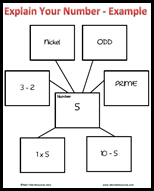
4. Compile & Explain – Allow students to play as explainyournumberfreebienormal, but once they have “eaten” all of their marbles, allow the students to use those marbles to create a number.  Once they have created a number, use this free sheet from Google Docs to allow your students to explain their number, thereby building those critical thinking skills!


I hope some of the ideas will help you use Hungry, Hungry Hippos in a new, different way. Find more ways to use board games in your room by clicking HERE. Keep playing games and watching your students learn.


Heidi Raki of Raki's Rad Resources