Showing posts with label desert. Show all posts

Thursday, June 26, 2014

Student Created Virtual Field Trips

The end of the school year is a time to reflect on the best lessons and units taught during the course of the year.  For me, my best unit this year was called “Deserts of the World”, where my students explored the 20+ deserts that exist on Earth.  The unit was centered around the BBC video – Planet Earth: Deserts, which we watched to kick off our unit.

Then, we created world maps with all of the deserts labeled on them.  We categorized our deserts into hot, cool and polar deserts and added the names and pictures of multiple desert animals from each region.

 Deserts of the world unit: habitats, adaptations, desert plants and desert animals - all covered in theis all inclusive unit from Raki's Rad Resources.

Next, we learned about how plants and animals adapt to the harsh climates of these deserts by looking at the needs of plants and animals and experimenting with the needs of a plant during our Great Plant Experiment.

Deserts of the world unit: habitats, adaptations, desert plants and desert animals - all covered in theis all inclusive unit from Raki's Rad Resources.

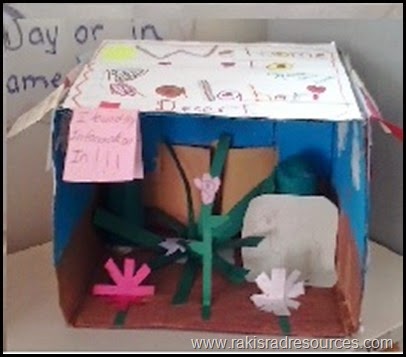
Finally, the students got a chance to choose a desert and become an expert by doing internet research.  Students used the information they found to create a Virtual Field Trip to their deserts.  They had the choice of creating a video, presentation, interactive poster, diorama or map.  Here are some of the projects that the kids made:

Deserts of the world unit: habitats, adaptations, desert plants and desert animals - all covered in theis all inclusive unit from Raki's Rad Resources.

Deserts of the world unit: habitats, adaptations, desert plants and desert animals - all covered in theis all inclusive unit from Raki's Rad Resources.

Deserts of the world unit: habitats, adaptations, desert plants and desert animals - all covered in theis all inclusive unit from Raki's Rad Resources.


Since the entire school was studying the desert, we chose a day at the end of the trimester to invite the younger students upstairs to see our projects.  We turned this into a “Desert Museum” where our students stayed put while the younger students came around and were able to “experience” each different desert.

Deserts of the world unit: habitats, adaptations, desert plants and desert animals - all covered in theis all inclusive unit from Raki's Rad Resources.

Deserts of the world unit: habitats, adaptations, desert plants and desert animals - all covered in theis all inclusive unit from Raki's Rad Resources.

Deserts of the world unit: habitats, adaptations, desert plants and desert animals - all covered in theis all inclusive unit from Raki's Rad Resources.

Deserts of the world unit: habitats, adaptations, desert plants and desert animals - all covered in theis all inclusive unit from Raki's Rad Resources.

If you are interested in doing a Deserts of the World unit with your class, you can find all of these activities – and more in my complete unit plan at my Teachers Pay Teachers store.  The unit also includes the Great Plant Experiment.

What was your favorite unit to teach this year?

Heidi Raki of Raki's Rad Resources

Friday, June 6, 2014

Desert Landscapes with Real Sand

This year I am the luckiest teacher in the world. I get to teach at the best school ever – International School of Morocco, with some of the best, most creative, teachers ever. Each time I walk into someone else’s classroom, I get inspired and we just seem to spiral great teaching ideas off of each other. It’s a wonderful place to teach, and since we are all collaborating, it’s a wonderful place for our kids to learn – a teacher’s dream, right? I have tried and tried to convince the other teachers to create blogs of their own to spotlight and share some of their amazing ideas, but everyone is super busy. Instead, they have each agreed to let me spotlight some of their ideas right here on Raki’s Rad Resources. So, each Friday night, I will be posting an ISM Spotlight.

Integrating science and social studies into art - African Masks - Raki's Rad Resources One of the things I love at ISM is that an effort is always made to integrate our science and social studies topics into our enrichments – art, music and drama.  Last year, the teachers taught the enrichment classes.  I taught art and we made African masks during our Africa unit and lamps during our Machines unit.  This year, we are lucky enough to have a full time enrichment teacher, Emma Sanders, who has done a lot of integration as well, including doing marble art during a forces unit and newspaper collages of important economic articles during our economy unit.  One of my kids’ favorite integrations – and the thing that showed up time and again on their online portfolio planning sheets as their “favorite part of art” was sand art.

Currently, our entire school is studying the desert.  Ms. Sanders did a project with the students where they drew desert landscapes in sand.  Integrating science and social studies into art - Desert Landscapes - Raki's Rad ResourcesFirst, students poured sand on their paper and used their fingers to draw out what they wanted.  Then they took a picture of this to hold their “brainstorming” electronically.  Next, students took another piece of paper and used glue sticks to make their design.  They then sprinkled sand over the glue and voila – desert landscapes with real sand.


How does your school integrate the arts?

Heidi Raki of Raki's Rad Resources


Friday, May 23, 2014

Desert Day

This year I am the luckiest teacher in the world. I get to teach at the best school ever – International School of Morocco, with some of the best, most creative, teachers ever. Each time I walk into someone else’s classroom, I get inspired and we just seem to spiral great teaching ideas off of each other. It’s a wonderful place to teach, and since we are all collaborating, it’s a wonderful place for our kids to learn – a teacher’s dream, right? I have tried and tried to convince the other teachers to create blogs of their own to spotlight and share some of their amazing ideas, but everyone is super busy. Instead, they have each agreed to let me spotlight some of their ideas right here on Raki’s Rad Resources. So, each Friday night, I will be posting an ISM Spotlight.

For the last science unit of the year, all of the students at the International School of Morocco study a biome – on a four year rotation.  Last year we studied the forest (to align with our study of Ancient Rome).  This year we are studying the desert (to align with our study of Ancient Egypt.)  Next year, we will study the rainforest (to align with our study of the Mayas and Incas).

Teach students about different deserts all around the world.  Students should learn about the plants, animals and people of each desert.  We taught students about the Apache Native Americans in the Chihuahuan Desert, the Mongolian people of the Gobi Desert, the Aboriginal people of the Australian Deserts and the Berber tribes of the Saharan Desert at the International School of Morocco during Desert Day.  Post by Heidi Raki of Raki's Rad Resources Since we live on the edge of the Sahara desert, it would be very easy to make this unit about only the Sahara desert.  However, in the spirit of international mindedness, we all felt that it was very important for students to learn about the different kinds of deserts that appear around the world.  The older students (Year 3 – Year 6 or 2nd – 5th grade) are each researching the plants, animals and peoples of one of the deserts around the world – from the Mojave desert to the Attacama desert to Antarctica and will be creating a “Virtual Field Trip Experience” with their Teach students about different deserts all around the world.  Students should learn about the plants, animals and people of each desert.  We taught students about the Apache Native Americans in the Chihuahuan Desert, the Mongolian people of the Gobi Desert, the Aboriginal people of the Australian Deserts and the Berber tribes of the Saharan Desert at the International School of Morocco during Desert Day.  Post by Heidi Raki of Raki's Rad Resources data.  The Year 1 & Year 2 students have compared animals and plants from different deserts while looking into food chains.  The whole school has been learning about how all life in the desert has adapted to these harsh biomes.  The Reception students even learned about how camel caravans used the stars to find their way through the desert.

To give our students even more exposure, we turned our half day into a “Desert  Day” where students rotated through 4 different deserts – each from a different continent.  The students worked together in their multiage “house” groups (from 3 years old to 11 years old).  In each room, students learned about the plants and animals of the desert, but they also spent time learning about the people of the area and the cultures that developed in these tough climates.  Here is a bit of what we did:

The Sahara Desert in Africa

In the Saharan Desert room, the students learned about Dromedary camels, cactus, and the Berber peoples of the Saharan with Mrs. Kadiri and Ms. Tolentino.  They learned how to wrap their head and face to protect themselves from sand storms.  They also learned about the tea ceremonies of the Berber people, and the tea ceremonies where people pour tea from a “camel”.  Students simulated this by sitting on top of the table and attempting to pour water into a cup below.

Teach students about different deserts all around the world.  Students should learn about the plants, animals and people of each desert.  We taught students about the Apache Native Americans in the Chihuahuan Desert, the Mongolian people of the Gobi Desert, the Aboriginal people of the Australian Deserts and the Berber tribes of the Saharan Desert at the International School of Morocco during Desert Day.  Post by Heidi Raki of Raki's Rad Resources

The Gobi Desert in Asia

In the Gobi Desert room, the students learned about Bactrian camels, wild onions and the people of Mongolia with Ms. Johnson.  They also learned about the yurts they live in, the music they make and about the Olzii symbol, also called the never-ending knot, which symbolizes the infinite universe and cycle of life and death to the people of Mongolia.  The Olzii symbol is said to keep away evil spirits and bring prosperity.  Students then created their own versions of the Olzii symbol with paint.

Teach students about different deserts all around the world.  Students should learn about the plants, animals and people of each desert.  We taught students about the Apache Native Americans in the Chihuahuan Desert, the Mongolian people of the Gobi Desert, the Aboriginal people of the Australian Deserts and the Berber tribes of the Saharan Desert at the International School of Morocco during Desert Day.  Post by Heidi Raki of Raki's Rad Resources

The “Outback” Deserts in Australia

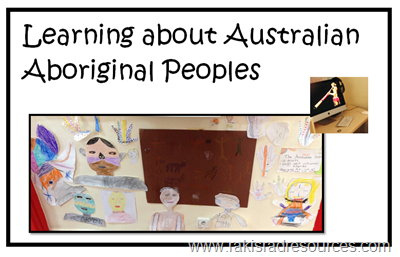
In the Australian Desert room, the students learned about kangaroos, dingoes, Eucalyptus trees, and the aboriginal people of Australia with Ms. Nassar.  They learned about the oldest instrument – the Didgeridoo, about ancient rock painting and about body painting.  Then, students had a chance to create their own rock paintings, body paintings and even their own Didgeridoos.
Teach students about different deserts all around the world.  Students should learn about the plants, animals and people of each desert.  We taught students about the Apache Native Americans in the Chihuahuan Desert, the Mongolian people of the Gobi Desert, the Aboriginal people of the Australian Deserts and the Berber tribes of the Saharan Desert at the International School of Morocco during Desert Day.  Post by Heidi Raki of Raki's Rad Resources


The Chihuahuan Desert in North America

In the Chihuahuan Desert room, the students learned about bats, buffalos, javalenias, mesquite plants and the Apache Native Americas of the Southwester United States and Mexico with me.  We learned about how the Apache made clothes of animal hides and beadwork, and made baskets with willow shoots.  Then, we tried our hand at weaving – mats for the younger students and baskets for the older students.  The baskets turned out to be a lot of work, and many students got frustrated, but all left with a sense of appreciation for the work that goes into making those beautiful tools.

Teach students about different deserts all around the world.  Students should learn about the plants, animals and people of each desert.  We taught students about the Apache Native Americans in the Chihuahuan Desert, the Mongolian people of the Gobi Desert, the Aboriginal people of the Australian Deserts and the Berber tribes of the Saharan Desert at the International School of Morocco during Desert Day.  Post by Heidi Raki of Raki's Rad Resources


Teach students about different deserts all around the world.  Students should learn about the plants, animals and people of each desert.  We taught students about the Apache Native Americans in the Chihuahuan Desert, the Mongolian people of the Gobi Desert, the Aboriginal people of the Australian Deserts and the Berber tribes of the Saharan Desert at the International School of Morocco during Desert Day.  Post by Heidi Raki of Raki's Rad Resources. Throughout the day, students carried with them their Desert Day Book, so that they could record facts about each desert and reflect on their learning.  If you are interested in doing a Desert Day at your school, feel free to download the book for free from Google Docs.

What collaborative days has your school done?

Heidi Raki of Raki's Rad Resources