Showing posts with label Social Studies. Show all posts

Saturday, May 2, 2015

Social Media Timelines

make timelines more fun by allowing students to create a series of social media posts. Ideas and resources from Raki's Rad Resources. 

Last month my kids were tasked with the project of creating a timeline about the country they have been studying this year. This was their final project for the history section of their Year Long Country Study Project. I often feel that timelines can be kind of a boring project. However, putting those events they have learned about into some sort of order helps kids to process the information better.

My oldest son read the project sheet and actually got excited. He didn’t feel that this project was boring at all. “Hey mom, can I make this like those fake Facebook histories?” he asked me. (If you don’t know what I’m talking about – check out the Facebook History of the World, but be warned it is a bit PG13 for strong language.) Leave it to him to find a creative technology solution for this project! Of course I said yes and he did a good job putting together a Prezi that looks like a series of social media posts or thought bubbles of the people who were actually at the event. Here’s what he came up with:


So if your students are bored with timeline projects, suggest this creative option to them – what would that history look like as a series of tweets or posts – or as an Instagram feed or a Pinterest board? This could also be done with books. Can you summarize this book in a series of tweets from the characters? Technology is a huge part of our kids’ lives. Rather than run from it, let’s embrace it!

Heidi Raki of Raki's Rad Resources

Tuesday, March 10, 2015

Halfway Done With Our Country Study Projects!

Year long country study project for any country in the world - great for homeschoolers or classrooms alike.  Students research any country they choose and cover all of their science and social studies standards, as well as literacy standards like informational reading and writing.  Resource from Raki's Rad Resources. I know that many of the teachers who read this blog are getting close to done with their school year, but we are running a year-round schedule this year, so we are actually just past halfway.  Last week, the kids finished the fifth project in their Year Long Country Study Project.  They created virtual field trips to one of the Ancient Civilizations that existed in their country.  This was the cumulative project from after a month of exploring what life was like in the years before 0 AD.


Each month we have worked on a different type of project – maps, food webs, art projects, virtual museum exhibits.  This month, they created virtual field trips.  They both chose to create their projects by creating recorded Power Point movies. 


Here are their projects:


Ancient China - the Han Dynasty (5th Grade)


Ancient Siberia - the Xiongnu Dynasty (2nd Grade) 


After finishing their projects, the boys write up a reflection and add their work to their comprehensive Live Binders project.  At the end of the year, each of their tabs will have a reflection and their project. 


Year long country study project for any country in the world - great for homeschoolers or classrooms alike.  Students research any country they choose and cover all of their science and social studies standards, as well as literacy standards like informational reading and writing.  Resource from Raki's Rad Resources 


This project has been perfect for my homeschool family, but I really wish I had created it last year when I was in the classroom.  The boys are not only learning about their own country, they also talk to each other, so they have learned a lot about the other child’s country as well.  Imagine a class of 20 each with different countries!  Plus, in addition to learning a wide range of Social Studies and Science skills, the boys work on research, reading comprehension and written expression.  Talk about covering a lot of skills! We’ve even incorporated some math into our history lessons as we figure out how many years happened between certain events and dynasties.  If you would like to use this Year Long Country Study Project with your classroom or homeschool family, feel free to download it at my Teachers Pay Teacher store.

Heidi Raki of Raki's Rad Resources


Thursday, January 22, 2015

Resources for Teaching About 9 Amazing Americans

In addition to running this blog, my RVing with the Rakis blog and homeschooling full time, I also create and sell resources that teachers can use in their classrooms and home schooling parents can use to help out their children.  To be fair, I am not creating nearly as many resources this year as I did in the past 9 years, for 2 reasons.  Reason #1 – I already have over 500 resources available in my Teachers Pay Teachers store, so much of what I need for my kiddos I have created already.  Reason #2 – I only have 3 students this year, so I have need of less resources.  However, I am going through resources that I made while I was teaching in a classroom full time and “cleaning them up” with clearer teacher directions, better fonts, etc.  I am also finishing out groupings or “series” that I have started and putting them into bundles so that teachers who are interested in buying multiple items from the same category have the opportunity to save some money.  For the next few weeks, I am going to spotlight some of the resources I have available in my Teachers Pay Teachers store.

Four years of my teaching career were spent teaching 3rd grade in Georgia.  A large part of our Social Studies curriculum was to teach students about 9 Americans who were important historical figures.  Through these figures we taught geography, history, government and character.  We looked at the events that shaped their lives to make them who they were.  We also looked at the events that they helped to create and how those events shaped history.

The 9 Americans that are taught as part of the Georgia Performance Standards are: Paul Revere, Frederick Douglass, Susan B. Anthony, Mary McLeod Bethune, Franklin D. Roosevelt, Eleanor Roosevelt, Thurgood Marshall, Lyndon B. Johnson and Cesar Chavez. 

When I was teaching this unit, it generally covered two quarters or more, so I made sure to have consistency between each person we studied.  We had a large, classroom wide timeline where we posted important events from each person’s life.  This helped students to make connections between those individuals who worked and lived at the same time and eradicated misconceptions like the idea that Frederick Douglass and Martin Luther King Jr. were friends – which one student told me before we started our timeline.  Then, after we studied each person, I printed my students these timelines to use as a “cheat sheet” and keep in their notebooks.

Timelines for 9 different Amazing Americans throughout American History.  These resources were designed to help teachers meet the Georgia Performance Standards for 3rd grade Social Studies.  Download now from Raki's Rad Resources.

One thing I learned while teaching this unit was that most of my third graders had great difficulty understanding what life might be like in 1745 or 1900.  The idea that there was life with no electricity, no t.v., no video games, blew their minds.  Then add in things like girls not being able to attend school and they were flabbergasted.  Additionally, they thought that life in 1745 was identical to life in 1920.  In order to help change their misconceptions, I put together Time Machine Power Points.  These Power Points gave students some information to help them truly understand what life was like for each of these people growing up.  To make it more fun, we would turn off the lights, stand up and spin around as if we were being transported to a new time. 

Time Machines for 9 different Amazing Americans throughout American History.  These resources were designed to help teachers meet the Georgia Performance Standards for 3rd grade Social Studies.  Download now from Raki's Rad Resources

Once we had learned the important facts about each of the 9 historical figures, I let the students choose one person to become an expert on.  Using my Amazing Americans Technology Project, the students would research their figure and create a Power Point or Prezi to present to the class with the information they found.  This aligned beautifully with my Informational Writing Unit.  Next, they would use the same information to create a brochure explaining why their person should win an award, which worked us into our Persuasive Writing Unit. 

Technology project for 9 different Amazing Americans throughout American History.  These resources were designed to help teachers meet the Georgia Performance Standards for 3rd grade Social Studies.  Download now from Raki's Rad Resources 

Finally, as a review for our Comprehensive Unit Test, the students would explore the Amazing Americans Internet Scavenger Hunt.  This is one of the first internet scavenger hunts I ever designed, and the way the students responded to it inspired me to create many more. I know have over 40!  It also provided a great way for the kids to solidify their knowledge about these historic individuals.

Internet Scavenger Hunt for 9 different Amazing Americans throughout American History.  These resources were designed to help teachers meet the Georgia Performance Standards for 3rd grade Social Studies.  Download now from Raki's Rad Resources

After I taught this for a few years, I put together the timeline, the technology project, the internet scavenger hunt and the comprehensive test into an Amazing Americans Bundle, which you can find on Teachers Pay Teachers.  Just recently, I bundled all of the American History Time Machine Power Points,including the years 1745 (Paul Revere), 1830 (Susan B. Anthony and Frederick Douglass), 1880 (Mary McLeod Bethune), 1900 (Franklin and Eleanor Roosevelt), 1920 (Thurgood Marshall and Lyndon B. Johnson) and 1940 (Cesar Chavez),  which you can also find on Teachers Pay Teachers.  I hope that all of these resources will be able to help you better teach your students about these 9 Amazing Americans, whether you live in Georgia or anywhere else in the world. 

 Heidi Raki of Raki's Rad Resources 

Wednesday, January 14, 2015

Top 10 Social Studies Websites for Elementary Students

For two years, I was the Technology Specialist at a school in Georgia. During that time, I amassed a large collection of websites that I use with my students. You can download my E-Book of Websites for the Elementary Classroom for free from Teachers Pay Teachers or Smashwords, or, you can check back here each week for the website suggestion.

Top 10 Social Studies Websites for Elementary Students - suggestions from Raki's Rad Resources

This week we are looking at Social Studies websites.  Here is a list of my favorite 10 websites to use in elementary classrooms when we are studying History, Government, and Geography.


1.) Social Studies for Kids – This website includes a collection of articles on current events, historical events and other great Social Studies topics. 

1.) Social Studies for Kids – This website includes a collection of articles on current events, historical events and other great Social Studies topics.


Ducksters – History & Geography – Ducksters is a great website for Science and Social Studies, but the Social Studies part is particularly fabulous.  Each category has tons of links to additional information and subcategories.  This is a great place to start students out when working on a research project.

2.) Ducksters – History & Geography – Ducksters is a great website for Science and Social Studies, but the Social Studies part is particularly fabulous.  Each category has tons of links to additional information and subcategories.  This is a great place to start students out when working on a research project.


BBC History for Kids – BBC has amazing educational resources for all subjects, but their history section is particularly fabulous.  This site has games that help students explore ancient history, British history, world wars, and historical figures from tons of different time periods. 

3.) BBC History for Kids – BBC has amazing educational resources for all subjects, but their history section is particularly fabulous.  This site has games that help students explore ancient history, British history, world wars, and historical figures from tons of different time periods.


 Timeline Maker – Generate a timeline with up to twelve events by simply inserting dates and descriptions in chronological order.  This timeline can then be printed and used in class.

4.) Timeline Maker – Generate a timeline with up to twelve events by simply inserting dates and descriptions in chronological order.  This timeline can then be printed and used in class.


Google Earth – How helpful is an online interactive globe where you can zoom into mountains, valleys and oceans?  So many ways this can be helpful with geography, topography and helping students build a strong base in understanding where history happened and why.  A perfect website to include in a unit on Maps & Globes

5.) Google Earth – How helpful is an online interactive globe where you can zoom into mountains, valleys and oceans?  So many ways this can be helpful with geography, topography and helping students build a strong base in understanding where history happened and why.  A perfect website to include in a unit on Maps & Globes


 Time for Kids – An online newspaper for kids with current event articles, videos, photos, etc. is a great source for Social Studies class.  In fact, I wrote an entirely separate blog post about Time for Kids awhile back, but it is a worthy addition to this list as well.

6.) Time for Kids – An online newspaper for kids with current event articles, videos, photos, etc. is a great source for Social Studies class.  In fact, I wrote an entirely separate blog post about Time for Kids awhile back, but it is a worthy addition to this list as well.


 World Atlas – This website provides an amazing interactive atlas.  Students begin at a world map.  If they click on a continent, they will be taken to a continent specific map as well as information about that specific continent.  Then, within the continent map, they can click on each country name and be taken to a country specific map with information about that specific country.  Talk about a great starting place for a Country Study Project, huh?

7.) World Atlas – This website provides an amazing interactive atlas.  Students begin at a world map.  If they click on a continent, they will be taken to a continent specific map as well as information about that specific continent.  Then, within the continent map, they can click on each country name and be taken to a country specific map with information about that specific country.  Talk about a great starting place for a Country Study Project, huh?


Garden of Praise – Biographies for Kids – This website includes biographies of tons of important individuals from history written specifically for kids.  Many of the biographies include links to additional reference material on the person, definitions of key vocabulary from the biography and video clips about the person in the biography.

8.) Garden of Praise – Biographies for Kids – This website includes biographies of tons of important individuals from history written specifically for kids.  Many of the biographies include links to additional reference material on the person, definitions of key vocabulary from the biography and video clips about the person in the biography.


  Congress for Kids – This amazing site has great information and diagrams to describe the creation of the United States government and the process of how each branch works.

9.)  Congress for Kids – This amazing site has great information and diagrams to describe the creation of the United States government and the process of how each branch works.


Ben’s Guide – This is a US government based site with lots of information about the services provided by the government, processes used to create laws and elect representatives.  The site is conveniently broken down by grade levels to make differentiation easier.

10.) Ben’s Guide – This is a US government based site with lots of information about the services provided by the government, processes used to create laws and elect representatives.  The site is conveniently broken down by grade levels to make differentiation easier.  


For more resources to integrate technology into your classroom, check out my Technology Integration Kit.  You can also check out these blog posts:

Top 10 Science Websites
Top 10 Reading Websites
Top 10 Writing Websites
Top 10 Math Websites
Websites to Teach Typing Skills
Websites to Create Videos


Heidi Raki of Raki's Rad Resources

Sunday, September 21, 2014

Salt Maps Solidify Understanding

Hello guys, sorry for my long absence here on the blog – I’ve had a migraine the size of Texas that makes looking at the computer screen a very big challenge.  It’s still there, but lighter, so here’s hoping we’re on the upswing!  Anyways, homeschooling (and teaching) rarely stops for a headache, so I wanted to share with you a project my boys did this week.
Creating salt maps to help students make sense of geography - great project for elementary and high school alike.  Easy to differentiate - Details at Raki's Rad Resources
Instead of completing separate Science and Social Studies units, my kiddos are doing year long Country Study Projects.  Each month, we spend three weeks researching a specific topic in regards to our country – through books, encyclopedias, videos and field trips – and then on week four, the kids take all of what they have “learned” and put it into action with a hands-on or technology based project.  I give the kids some basic expectations for their project, but they have a lot of freedom with how they want to create and deliver project.
For the last three weeks, we have been looking at the geography and climate of our countries (Russia for my 2nd grader and China for my 5th grader), so this week they were tasked with creating a map. 
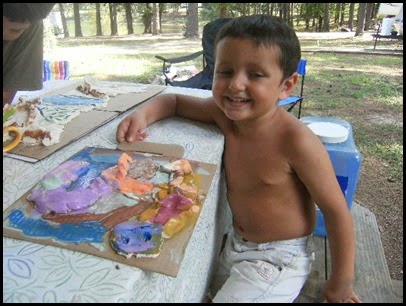
My younger son is much more of a kinesthetic learner, so he chose to create a salt map, giving him a chance to build the Ural Mountains and Bakail Lake with his hands and paint not only the landforms, but the bordering countries and the Arctic Ocean.  We used a recipe I got from another blogger I love – Becky from Kid World Citizen and he had so much fun that he kept telling me “This isn’t work mom, it’s easy!” Here are a few pictures of the process:
Creating salt maps to help students make sense of geography - great project for elementary and high school alike.  Easy to differentiate - Details at Raki's Rad ResourcesFirst, he spread the clay out on the cardboard with the outline his daddy drew for him.
Creating salt maps to help students make sense of geography - great project for elementary and high school alike.  Easy to differentiate - Details at Raki's Rad ResourcesThen, he added in all of the landforms.  This took a few trips back to the map to determine where exactly those rivers and mountains were supposed to be.
Creating salt maps to help students make sense of geography - great project for elementary and high school alike.  Easy to differentiate - Details at Raki's Rad Resources Finally he determined colors for his landforms and countries and had a blast painting his map.
Creating salt maps to help students make sense of geography - great project for elementary and high school alike.  Easy to differentiate - Details at Raki's Rad Resources And here is the final product.
Creating salt maps to help students make sense of geography - great project for elementary and high school alike.  Easy to differentiate - Details at Raki's Rad Resources
Since we were playing with clay, the little one (3 years old) decided he needed to get in on the action too, so he created the first letter of his name – S.


My oldest son is a technology guy and so he took a completely different take on this project.  Using Power Point, he created a layered map, and then recorded himself explaining the map using Camtasia Studio – the same program that I use for my Math Mini Lesson Videos.  Besides showing him how to draw on the map, he created this project completely independently – which was great for a mom with a headache!
Although both of the maps made by the boys came out quite differently, what I noticed was that during the process of making the maps, the kids would say things like “I know the mountains are in the East, but where?” and go back to the map to check again.  They were clarifying and building on to their own knowledge by building this project.  This will keep it in their memory so much longer than if they had memorized the information to study for a test.  Hope your week of teaching and learning was as fabulous as ours was!
Heidi Raki of Raki's Rad Resources

Sunday, August 17, 2014

Get in Touch with History by Walking Around It

During the summer, most teachers I know spend at least some time planning for the next school year.  My favorite “planning” to do during the summer is field trip planning, because it means I get to tour cool places I’d like to take my students to – often with my own kids in tow.  Here are some of my favorite field trip locations, that can be found in most every community, as well as a list of content connections you can make for your students.  Often as teachers we only include field trips in our science and social studies, but there are lots of reading, writing and math connections that can be made in these locations as well.  I am going to share one type of field trip a week and ideas for making curriculum connections with each field trip.

field trips

Historical Sites: Battlefields, lighthouses, colonial homes, ancient ruins, anything of historical importance can be of great insight to students.  Seeing how things once were helps them to better understand how things once were.  My best historical site field trip had to be the Ancient Roman Ruins at Chellah, which you can read about this old blog post.

Reading: Historical fiction stories come to life when you are able to visit the places where these stories take place.  Newspaper articles – new and old – make for great reading in connection to historical sites, as do “first person accounts” of what went on in these places.  This is a great time to talk about the difference between primary and secondary sources, as well as in comparison with historical fiction based off of these events.

clip_image001Writing:  Once students have experienced the historical site, they can have a chance to write from the point of view of a person who lived or worked at this site.  Students may also write informational – newspaper articles – about the current site, OR about the site as it existed during it’s most important time period.  Taking time to write a descriptive essay that makes someone else feel as if they experienced the same field trip is also a great writing activity for historical field trips.

Math:  Using timelines is a great way to teach elapsed time.  Create a timeline of important events that happened at this location.  Have students create their own word problems based off of this timeline.  For example:  How long was it from when the castle was built until when King X moved in?

Science:  Students can explore the questions:  What materials were used to build this site?  How have they lasted as long as they have?  What types of preservation has been done? Were any archeological techniques used?

Social Studies:  Exploring the history of the area is huge, but students could also explore the time periods when this building was in its peak, the geographical and political elements that led to its creation, the elements that led to the downfall or closing of the site.  Creating a map or timeline of the site could also be beneficial.

To make field trips more educational, I often use graphic organizers and other activities to keep my students focused.  Read more about the specifics in this blog post: Field Trips Aren’t Just For Fun.  Be sure to stop by next week for another Field Trip Curriculum Connection.

What is your best field trip idea?

Heidi Raki of Raki's Rad Resources

Sunday, August 10, 2014

The Lawmakers Are In – Time for a Field Trip!

During the summer, most teachers I know spend at least some time planning for the next school year.  My favorite “planning” to do during the summer is field trip planning, because it means I get to tour cool places I’d like to take my students to – often with my own kids in tow.  Here are some of my favorite field trip locations, that can be found in most every community, as well as a list of content connections you can make for your students.  Often as teachers we only include field trips in our science and social studies, but there are lots of reading, writing and math connections that can be made in these locations as well.  I am going to share one type of field trip a week and ideas for making curriculum connections with each field trip.

 Make the most of your next field trip with these curriculum connections from Raki's Rad Resources

Government Buildings  Seeing how government works first hand can be extremely powerful and enlightening for children.  Most city halls and court houses will allow tours, and some might even arrange for children to speak with lawmakers.  Providing students with access to how and where laws are made gives them a sense of empowerment and may be the building of future political leaders.

Reading:  Dr. Seuss has a collection of stories that talk about government – without talking about government: Yertle the Turtle and If I Ran the Zoo are both great for beginning the discussion about government.  Most states these days of their own websites; let students explore the websites, reading for information about what goes on

Make the most of your next field trip with these curriculum connections from Raki's Rad Resources.Writing:  Create a list of questions you would ask if you were going to interview a lawmaker – if you get a chance to speak with one, be sure to ask some of the questions!  If you don’t get a chance to speak with one, do internet research to see if you can come up with the answers and create a “mock interview” with the information you find.  Write an informational essay about the history of the building you go to.  Make a list of information you would like to see added to the government building’s website.

Math:  Look for 2-dimensional and 3-dimensional shapes in the architecture of the building: arcs are semi-circles, domes are half a sphere, columns are tall cylinders.  How long has this building been around?  Create a timeline to explore the elapsed time history of the building.

Science:  While walking around the building, think about these questions:  What type of architecture or engineering went into the design of the building?  What materials were used?  Where did the materials come from?  What repairs need to be done, now or in the future?

Social Studies:  What type of government work goes on in the building?  Explore the connection between this government building, and other government buildings at different levels (ie. the county courthouse vs. the Supreme Courthouse).  If the chance is given, talk to a lawmaker about their job and the laws they have worked with.  Find out where the money comes from to fund this building and the people who work inside it.  Discover the history behind the building.

To make field trips more educational, I often use graphic organizers and other activities to keep my students focused.  Read more about the specifics in this blog post: Field Trips Aren’t Just For Fun.  Be sure to stop by next week for another Field Trip Curriculum Connection.

What is your best field trip idea?

Heidi Raki of Raki's Rad Resources

Monday, August 4, 2014

Beaches and Mountains – What Landforms Do You Live Near?

During the summer, most teachers I know spend at least some time planning for the next school year.  My favorite “planning” to do during the summer is field trip planning, because it means I get to tour cool places I’d like to take my students to – often with my own kids in tow.  Here are some of my favorite field trip locations, that can be found in most every community, as well as a list of content connections you can make for your students.  Often as teachers we only include field trips in our science and social studies, but there are lots of reading, writing and math connections that can be made in these locations as well.  I am going to share one type of field trip a week and ideas for making curriculum connections with each field trip.
  Get the most out of your next field trip with these curriculum connections from Raki's Rad Resources
Natural Landforms: beaches, mountains, lakes, rivers, etc.  Natural formations of the earth give us so much to talk about.  Being there and experiencing these places provides students with more than just a photo opportunity.  Landforms may differ depending on your location.  I have done beach field trips, mountain field trips and desert field trips – all helped my students expand their knowledge base and make curriculum connections like these.
Reading:  Non fiction reading about the creation, use or history of landforms in your area.  Fiction stories about a trip to the beach or climbing a mountain.  Read newspaper articles that talk about current events involving the landform – beach cleanups or wildlife protection acts.
Get the most out of your next field trip with these curriculum connections from Raki's Rad Resources.Writing:  Write the creation story of a landform, from the point of view of a rock sitting near by.  Create a pamphlet convincing people to come and visit this landform.  Write a descriptive essay that would make someone feel as though they were sitting right on or near this landform – be sure to take notes while you are there to help you remember how you felt.
Math:  Count, or estimate:  How many steps to the top of the mountain?  How many tide pools on the beach?  How many fish in the river? How many grains of sand in a bucket?
Science:  Science connections may vary depending on the type of landform, but for all different landforms, you can learn about how it was created, what animals or plants have adapted to live there, how the weather, or other natural forces like tides, affects the landform etc.
Social Studies:  Landforms tend to be a big part of local history.  Was this landform a help or a hindrance to historical populations?  Are there any historical events which happened here?  Are there any laws protecting this landform?  Does this landform attract tourist revenue?
To make field trips more educational, I often use graphic organizers and other activities to keep my students focused.  Read more about the specifics in this blog post: Field Trips Aren’t Just For Fun.  Be sure to stop by next week for another Field Trip Curriculum Connection.
What is your best field trip idea?
Heidi Raki of Raki's Rad Resources


Sunday, July 27, 2014

Stop and Look at the Flowers – Oh and Learn Along the Way

During the summer, most teachers I know spend at least some time planning for the next school year.  My favorite “planning” to do during the summer is field trip planning, because it means I get to tour cool places I’d like to take my students to – often with my own kids in tow.  Here are some of my favorite field trip locations, that can be found in most every community, as well as a list of content connections you can make for your students.  Often as teachers we only include field trips in our science and social studies, but there are lots of reading, writing and math connections that can be made in these locations as well.  I am going to share one type of field trip a week and ideas for making curriculum connections with each field trip.

Make the most out of your next field trip to the botanical gardents with these curriculum connections from Raki's Rad Resources.

Botanical Gardens:  Plants from all different habitats available in one place.  A chance to look at many parts of the life cycles.  Botanical Gardens provide so many different learning possibilities.

Reading:  There are great books out there about plants, including Diary of a Sunflower, the Great Kapok Tree and From Seed to Plant.  Reading the signs and placards at the botanical gardens is a highly overlooked skill – many kids walk right by without gaining that bit of extra information that they can get by looking at the posted signs.

Make the most out of your next field trip to the botanical gardents with these curriculum connections from Raki's Rad Resources.Writing:  Write the life story of one of the plants – from the point of view of the plant.  Look at the scientific names for the plants – see what root words you can find in these names.  Write a letter to the editor about why we should (or shouldn’t) give more money to the Botanical Gardens.

Math:  Create a tally chart to track which types of plants you see – trees, flowers, shrubs, cactus etc.  Measure the height of different plants. 

Science:  Explore the life cycle of a plant.  Note down ways plants are specially adapted to their natural habitat.  Keep track of which plants flower and which plants don’t.  Learn about how plants help out humans.  Choose one plant you see and research further information about it.  Group related plants together and explain how they are similar and how they are different.

Social Studies:  Explore how people have used plants for their benefit – for food, for medicine, for decoration etc.  Explore laws protecting certain types of plants.  Bring world maps and have students label where each type of plant comes from.

To make field trips more educational, I often use graphic organizers and other activities to keep my students focused.  Read more about the specifics in this blog post: Field Trips Aren’t Just For Fun.  Be sure to stop by next week for another Field Trip Curriculum Connection.

What is your best field trip idea?

Heidi Raki of Raki's Rad Resources

Sunday, July 20, 2014

Exploring Nature Field Trip

During the summer, most teachers I know spend at least some time planning for the next school year.  My favorite “planning” to do during the summer is field trip planning, because it means I get to tour cool places I’d like to take my students to – often with my own kids in tow.  Here are some of my favorite field trip locations, that can be found in most every community, as well as a list of content connections you can make for your students.  Often as teachers we only include field trips in our science and social studies, but there are lots of reading, writing and math connections that can be made in these locations as well.  I am going to share one type of field trip a week and ideas for making curriculum connections with each field trip.

field trips - make the most of them with these curriculum connections from Raki's Rad Resources

 Nature Preserve:  Seeing natural animals in their natural habitat – outside of cages – can be highly beneficial for students.  Knowing how animals are helped to stay in their natural habitat can also be completely beneficial.  Plus, there are so many benefits from simple nature hikes.  Find a blog post I wrote about nature hikes here.    

Reading:  Any number of books about animals can be read before and after going to a nature preserve.  Non fiction books about the types of animals you will see.  Fiction stories about animals, like Winnie the Pooh, the Berenstain Bears or Make Way for Ducklings – Talk about the difference between fictional animals and real animals. Read news articles and opinion pieces about nature preserves vs. zoos.

field trips - make the most of them with these curriculum connections from Raki's Rad Resources - trip to a nature preserveWriting:  Write informational essays about the natural habitat of one of the plants or animals that can be found in the nature preserve.  Persuasive writing – which is better nature preserves or zoos?  Write a fiction story from the point of view of one of the animals.

Math:  Measure how wide the trees are; learn about tree rings and calculate the age of a tree stump.  Create a graph of the animals living at the preserve, or of a statistic (like survival rate or release rate).

Science:   Learn about animal habitats, animal life cycles and animal adaptations.  Learn about plant habitats, plant life cycles and plant adaptations.  Discover how to protect the earth.  Explore the interconnectivity of plants, animals and humans.  Look at leaves and try to identify the different types of trees.  Look for “proof” of animal activity – footprints, feathers, droppings.

Social Studies:  Learn about how native people used nature to live.  Research people like Theodore Roosevelt and John Muir, who worked to set aside national parks to preserve nature, and complete a biography projects with the information.  Explore the laws and current trends that affect ecology.  Discuss what happens when gold or oil is found in a place that is protected by law.


To make field trips more educational, I often use graphic organizers and other activities to keep my students focused.  Read more about the specifics in this blog post: Field Trips Aren’t Just For Fun.  Be sure to stop by next week for another Field Trip Curriculum Connection.

What is your best field trip idea?

Heidi Raki of Raki's Rad Resources

Sunday, July 13, 2014

Behind the Scenes Factory Tours Have Learning Benefits for Kids

During the summer, most teachers I know spend at least some time planning for the next school year.  My favorite “planning” to do during the summer is field trip planning, because it means I get to tour cool places I’d like to take my students to – often with my own kids in tow.  Here are some of my favorite field trip locations, that can be found in most every community, as well as a list of content connections you can make for your students.  Often as teachers we only include field trips in our science and social studies, but there are lots of reading, writing and math connections that can be made in these locations as well.  I am going to share one type of field trip a week and ideas for making curriculum connections with each field trip.
field trips
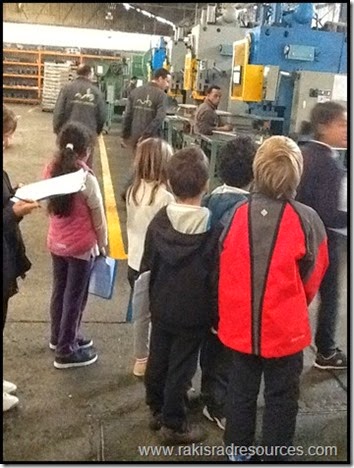
Factories:  Behind the scenes tours of any sort of factory can be extremely educational and can give students a chance to see a world they had no idea existed.  Need help getting into a factory?  Ask around, the families of your students often include someone who works in a factory of some sort, in some capacity, and can put you in contact with the right people.  I have personally done behind the scenes tours of furniture factories, baked goods factories, candy factories and power plants.
Reading:  Read a how-to manual or recipe to create a good similar to those who are created in the factory.  Read advertisements from the factory and determine the persuasive techniques used. 
clip_image001Writing:  Write an essay from the point of view of one of the natural resources that comes into the factory, how it is then changed into a processed good.  Create an advertisement campaign for the factory.  Write an informational essay about how safety procedures are applied in the factory.
Math:  Keep track of the temperatures used in various departments and use that information to create a graph.  Look at the resources that come in to the factory.  How many items are in a package?  How many packages are there?  How many items altogether?
Science:  Search for machines – simple or complex, using my Factory Field Trip sheet.  Find examples of conductors and insulators or magnets or computerized techniques.  Look for safety methods used by factory workers.
Social Studies:  Choose a “good” and research all of the steps it takes to go from the natural resources to the processed good.  Then try to visit a factory that produces that type of goods.  Compare and contrast how goods are made today with how goods were made 200 years ago.  Map out the trip taken by the natural resources that come into a factory and the processed goods that come out of the factory.
 
To make field trips more educational, I often use graphic organizers and other activities to keep my students focused.  Read more about the specifics in this blog post: Field Trips Aren’t Just For Fun.  Be sure to stop by next week for another Field Trip Curriculum Connection.
What is your best field trip idea?

Heidi Raki of Raki's Rad Resources


Sunday, July 6, 2014

Making Museums Magical for Kids

During the summer, most teachers I know spend at least some time planning for the next school year.  My favorite “planning” to do during the summer is field trip planning, because it means I get to tour cool places I’d like to take my students to – often with my own kids in tow.  Here are some of my favorite field trip locations, that can be found in most every community, as well as a list of content connections you can make for your students.  Often as teachers we only include field trips in our science and social studies, but there are lots of reading, writing and math connections that can be made in these locations as well.  I am going to share one type of field trip a week and ideas for making curriculum connections with each field trip.
Educational Benefits of a Field Trip - Benefits of a field trip - curriculum connections for reading, writing, math, science and social studies - from Heidi Raki of Raki's Rad Resources
Museums:  Science museums, natural history museums, art museums, local history museums etc.  Any museum, no matter how small, can provide a great learning experience for children.  Children’s museums gear their exhibits towards the interests and curriculum of children, and if there’s one in your area, you should definitely look it up.  However, don’t be scared to do regular museums.  I have walked through some of the fanciest art museums with a group of small children.  Set the rules ahead of time, let them know that this is a “look, but don’t touch” museum, and take plenty of time to TALK to the kids about what they are looking at.
Reading:  Any Magic School Bus or Magic Tree House book could possibly lead to great museum connections.  We read Vacation Under a Volcano before going to see the Roman coins and figures museum and Dinosaurs Before Dark before going to the local dinosaur exhibit.  Historical fiction stories also provide great connections.  One of my favorite museum memories is going to a local history museum with students right after completing the book Mister and Me and watching my students get enthralled with studying the old Singer sewing machines that had been a large part of the novel.
Educational Benefits of a Trip to the Museum - curriculum connections for reading, writing, math, science and social studies - from Heidi Raki of Raki's Rad ResourcesWriting:  Who hasn’t seen Night at the Museum?  Have kids write about what would happen if the exhibits came to life.  Create a brochure advertising the wonderful exhibits at the museum, or have students write persuasive letters to find more funding for an exhibit they would like to see added.
Math:  Elapsed time is a great activity to work on in museums, as so many exhibits will be marked with a date of creation.  Can students figure out how old each exhibit is?  Children’s museums often have exhibits with a focus on 3-dimensional shapes or building with odd shaped blocks.
Science:  There are so many science museums out there with exhibits on everything from paleontology to meteorology to various forms of technology.  Even art museums can give you a lot to talk about as you look at different substances used to create art and the engineering that goes into sculptures.  I always include a trip to a museum with old cars or trains in my Machines unit!
Social Studies:  Archeological history, local history, country history, ancient history, there is so much history that can be explored in museums.  Additionally, many museums include ancient coins and materials used in economies or daily living.  When I taught my Africa unit, the kids were thrilled to look at coins from all over Africa at a local museum. 
To make field trips more educational, I often use graphic organizers and other activities to keep my students focused.  Read more about the specifics in this blog post: Field Trips Aren’t Just For Fun.  Be sure to stop by next week for another Field Trip Curriculum Connection.
What is your best field trip idea?
Heidi Raki of Raki's Rad Resources